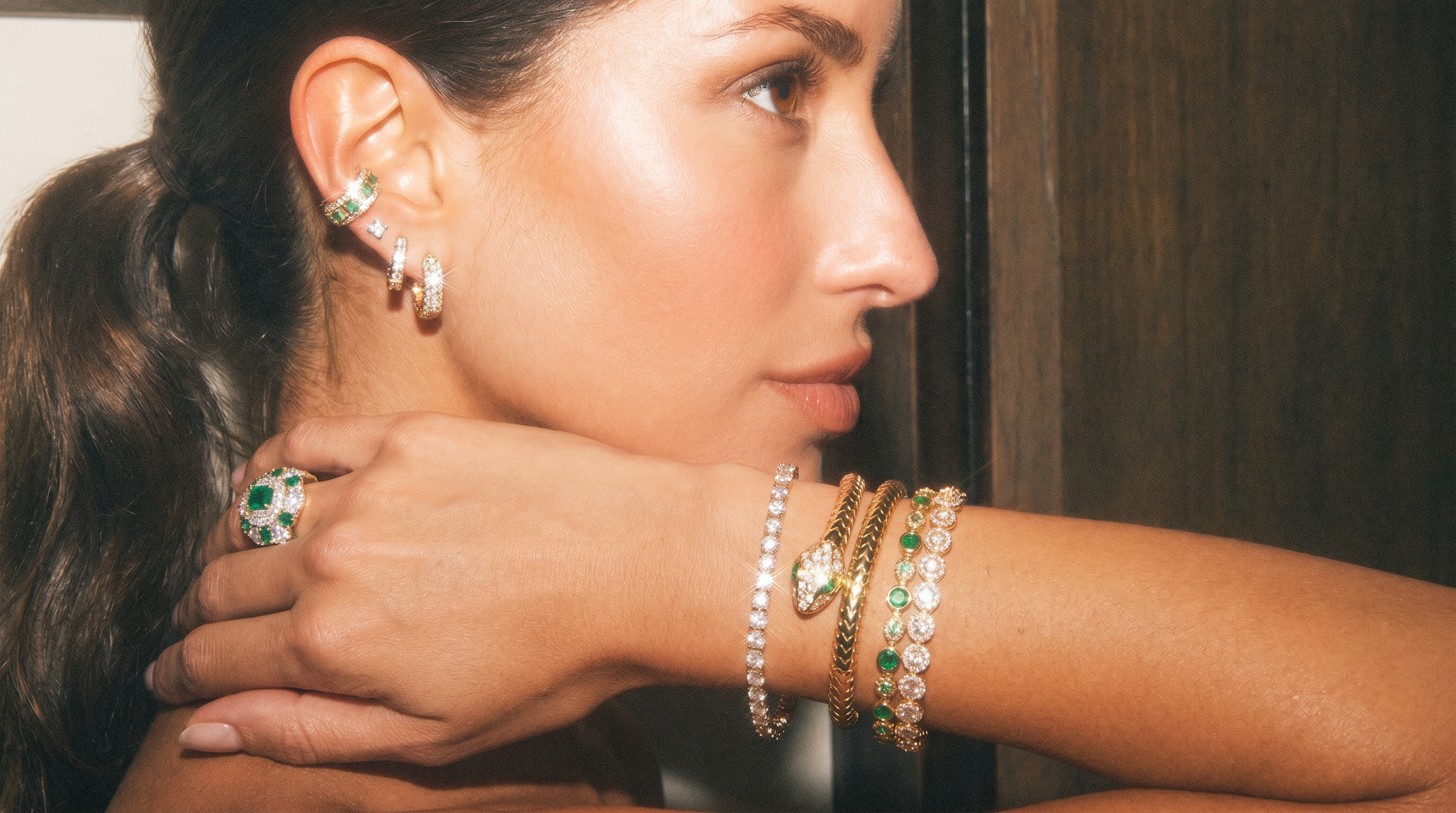


How to Choose a Gold Bracelet: Style, Fit, and Everyday Wear
Choosing a gold bracelet is more specific than it looks. A bracelet that fits well sits in a particular place on the wrist, moves freely without sliding over the hand, and has a visual weight that is proportionate to the wrist it is on. A bracelet that does not fit well, even a beautiful one, will either feel restrictive or slide constantly, and neither is comfortable for daily wear.
This guide covers how to find the right fit, which bracelet styles work for different wrist sizes and proportions, how to approach stacking, and what separates a bracelet built for daily wear from one that is not.
How to Measure Your Wrist for a Bracelet
Measure your wrist at the narrowest point, just above the wrist bone. Use a soft tape measure or a strip of paper wrapped around the wrist and measured against a ruler. This gives you your wrist circumference.
From there, add a comfort allowance depending on how you want the bracelet to sit:
- Snug fit: Add 1 to 1.5cm to your wrist measurement. The bracelet sits close to the wrist with minimal movement.
- Standard fit: Add 1.5 to 2cm. The bracelet moves freely on the wrist without sliding over the hand. This is the most comfortable fit for daily wear.
- Loose fit: Add 2.5 to 3cm. The bracelet sits lower on the wrist and moves more noticeably. Works for a relaxed, stacked look but can feel distracting during tasks that require hand movement.
For most everyday bracelets, a standard fit with 1.5 to 2cm of ease is the most practical. The bracelet is present and visible without requiring constant adjustment.
How Wrist Size Affects Which Bracelet Looks Right
Bracelet fit is about more than comfort. The visual weight of a bracelet should be proportionate to the wrist it is on. A very fine chain on a wider wrist can look like it is floating rather than sitting. A heavier chain on a narrower wrist can look like it is overwhelming the wrist rather than complementing it.
Narrower Wrists
A single fine to medium chain bracelet is the most proportionate choice. The chain should have enough visual presence to read clearly without dominating the wrist. A very delicate chain at under 1mm width can look proportionate on a narrow wrist but may feel too subtle to register as a deliberate piece. A chain at 1.5 to 2mm width reads more clearly and still feels light.
Stacking two thin bracelets on a narrower wrist creates a layered look without adding too much bulk. Three or more bracelets can start to overwhelm a narrower wrist and may slide up the arm rather than sitting as a stack.
Wider Wrists
A slightly heavier chain or two to three bracelets stacked together reads as more balanced on a wider wrist. A single very fine chain can look undersized and may not register as a deliberate styling choice. A chain at 2 to 3mm width, or two thinner chains worn together, creates a more proportionate look.
A wider wrist also has more surface area for a bracelet to sit on, which means a slightly longer bracelet length is often needed to achieve the same standard fit as a shorter length on a narrower wrist.
Gold Bracelet Styles: Which Is Right for You?
Chain Bracelets
A chain bracelet is the most versatile everyday option. It moves naturally with the wrist, sits flat against the skin, and works across casual, professional, and evening contexts without adjustment. The link style determines the visual weight and texture of the piece.
Common chain styles and what they look like on the wrist:
- Cable chain: Simple oval links, clean and minimal. The most versatile everyday chain style.
- Curb chain: Flat, interlocking links that lie flush against the wrist. Slightly more substantial than a cable chain at the same width.
- Figaro chain: Alternating short and long links. More visual texture than a plain cable chain.
- Box chain: Square links with a structured, geometric look. Sits very flat and clean on the wrist.
- Rope chain: Twisted links that create a spiral effect. More visual complexity than a plain chain.
Bangles
A bangle is a rigid bracelet that slips over the hand rather than fastening with a clasp. It sits higher on the wrist than a chain bracelet and moves differently, making a light sound when it contacts other bangles or surfaces. A single slim bangle is a clean, minimal choice. Multiple bangles stacked together create a more expressive look.
Bangles require a different sizing approach than chain bracelets. The inner diameter of the bangle needs to be wide enough to pass over the knuckles of a closed hand. A bangle that is too narrow will not go on. One that is too wide will slide off. Most bangle sizing is based on hand circumference rather than wrist circumference.
Cuff Bracelets
A cuff is an open-ended rigid bracelet that slides onto the wrist from the side rather than over the hand. The opening allows for some size adjustment. Cuffs sit higher on the wrist than chain bracelets and have a more structured, architectural look. They work well as a single statement piece rather than as part of a stack.
Tennis Bracelets
A tennis bracelet is a flexible chain set with stones at regular intervals. The name comes from a 1987 incident where tennis player Chris Evert lost her diamond bracelet mid-match and stopped the game to find it. Tennis bracelets are more formal than plain chain bracelets and work better for evening and occasion wear than for everyday use, though a very minimal version with small stones can work daily.
What Makes a Bracelet Work for Daily Wear?
A bracelet built for daily wear needs to meet three practical criteria: it should be comfortable enough to forget you are wearing it, durable enough to handle the friction and movement of a full day, and versatile enough to work across the different contexts of a typical day.
Comfort
A bracelet that requires constant adjustment, catches on clothing, or feels heavy after a few hours is not a daily wear piece regardless of how it looks. Chain bracelets with a standard fit and a smooth clasp mechanism are the most comfortable for all-day wear. Bangles can be comfortable but may make noise that becomes distracting in quiet settings.
Durability
The clasp is the most vulnerable point of any chain bracelet. A lobster clasp or a box clasp with a safety mechanism is more secure than a spring ring clasp for daily wear. The chain itself should have enough weight to hold its shape without being so fine that it kinks or breaks easily.
For gold plated bracelets, the inner surface of the bracelet, the side that sits against the skin, experiences the most friction and therefore the most plating wear. A hypoallergenic base alloy beneath the plating means that as the finish wears on the inner surface, the base metal in contact with skin is still non-reactive.
DEBACQ bracelets use 18k yellow gold plating over the DEBACQ Yellow Alloy, a base made from 95% recycled material with anti-tarnish properties, designed to hold up to the friction and moisture exposure of daily wear.
Versatility
A bracelet that works across casual, professional, and evening contexts is more useful than one that only works in one setting. A slim chain bracelet at a standard fit achieves this more reliably than a very chunky chain or a heavily embellished piece. The goal for a daily wear bracelet is a piece that you can put on in the morning and not think about again until you take it off at night.
How to Stack Gold Bracelets
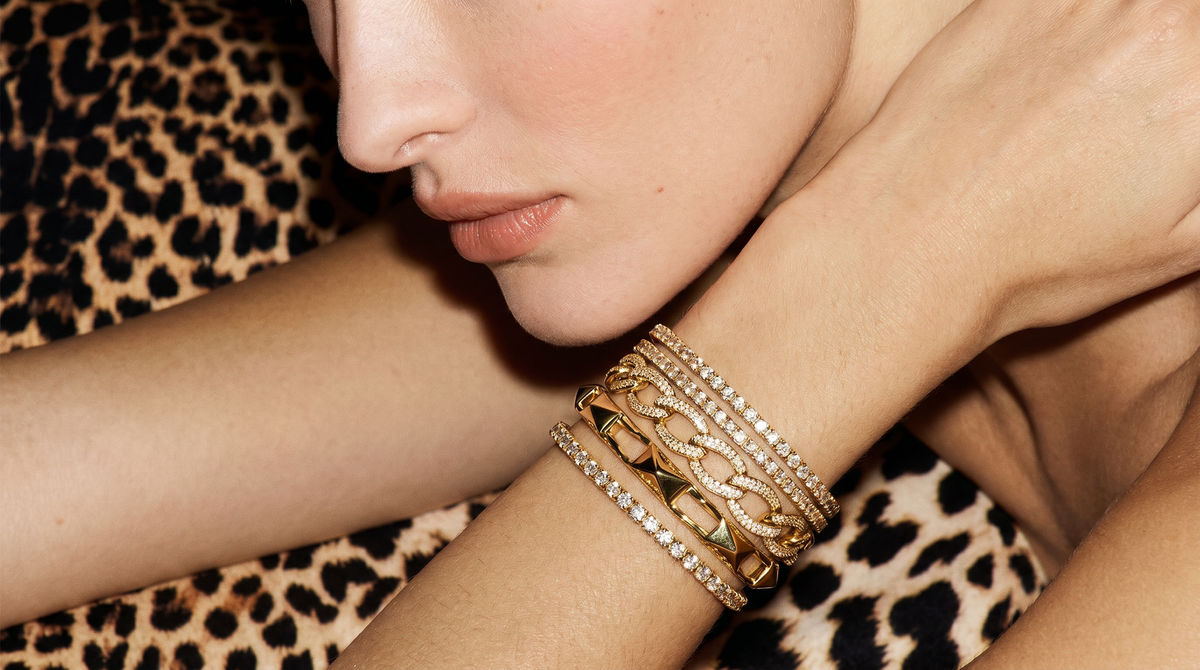
A bracelet stack works when the pieces share a consistent metal tone and vary slightly in style or weight. Two identical chain bracelets worn together tend to tangle and slide as one piece rather than sitting as a distinct stack. Two bracelets with different link styles or slightly different weights sit more cleanly and read as a deliberate combination.
Two-Bracelet Stack
A chain bracelet paired with a slim bangle is one of the most reliable two-piece combinations. The chain moves with the wrist while the bangle sits more rigidly, and the contrast between the two textures creates visual interest without requiring the pieces to match exactly. Both should be in the same metal tone for the combination to feel intentional.
Three-Bracelet Stack
Three bracelets is the practical maximum for most wrists before the stack starts to feel heavy or restrictive. A three-piece stack works best with pieces of varying weight: one slightly heavier chain as the anchor, one thinner chain, and one slim bangle or a different link style. This creates a hierarchy within the stack that gives the eye somewhere to land.
Where the Stack Should Sit
A bracelet stack sits most naturally in the lower third of the wrist, between the wrist bone and the base of the hand. Bracelets that are too loose slide up the forearm and lose the stacked effect. Bracelets that are too tight sit stiffly and do not move naturally. The standard fit with 1.5 to 2cm of ease keeps the stack in the right position through normal movement.
Find gold bracelets designed for daily wear and stacking.
Bracelet and Watch: Wearing Both on the Same Wrist
Wearing a bracelet on the same wrist as a watch is a deliberate styling choice that works when the pieces are proportionate to each other. A slim chain bracelet next to a watch with a thin profile reads as a considered combination. A chunky chain next to a large sport watch can look crowded rather than layered.
The bracelet should sit on the opposite side of the watch from the crown, which is the small knob used to set the time. This prevents the bracelet from catching on the crown during normal wrist movement. A bracelet on the wrist side of the watch face also tends to slide under the watch rather than sitting beside it, which defeats the purpose of wearing both.
The cleaner approach for most people is a bracelet stack on the opposite wrist from the watch. This avoids the sizing and positioning considerations entirely and gives each wrist its own distinct look.
Bracelet Style Quick Reference
| Style | Best Wrist Size | Best For | Daily Wear Practicality |
|---|---|---|---|
| Fine chain (under 1.5mm) | Narrower wrists | Minimal everyday look, layering base | Very high |
| Medium chain (1.5 to 2.5mm) | All wrist sizes | Everyday anchor piece, most versatile | Very high |
| Heavier chain (3mm and above) | Wider wrists | Statement piece, stacking anchor | High |
| Slim bangle | All wrist sizes | Layering with a chain, minimal structure | High |
| Cuff | All wrist sizes | Single statement piece, structured look | Moderate |
| Tennis bracelet | All wrist sizes | Evening and occasion wear | Moderate |
Do and Don't: Choosing and Wearing a Gold Bracelet
| Do | Don't |
|---|---|
| Measure your wrist before buying | Assume standard sizing will fit without checking |
| Add 1.5 to 2cm for a comfortable everyday fit | Size too snug, which causes discomfort and restricts movement |
| Match bracelet weight to wrist proportions | Wear a very fine chain on a wider wrist where it will look undersized |
| Mix chain styles when stacking to prevent tangling | Stack two identical chains that will slide together as one piece |
| Remove before swimming, showering, or exercise | Expose gold plated bracelets to chlorine or prolonged sweat |
| Store flat or hanging to maintain chain shape | Leave bracelets tangled in a drawer |
Frequently Asked Questions
How do I know what size bracelet to buy?
Measure your wrist circumference at the narrowest point just above the wrist bone, then add 1.5 to 2cm for a standard everyday fit. This gives the bracelet enough room to move freely without sliding over the hand. If you prefer a snug fit, add 1 to 1.5cm. If you prefer a looser look, add 2.5 to 3cm.
What is the most versatile gold bracelet style for everyday wear?
A medium chain bracelet at 1.5 to 2.5mm width with a lobster clasp is the most versatile everyday option. It works across casual, professional, and evening contexts, sits comfortably for all-day wear, and layers well with other bracelets or a bangle. The cable and curb chain styles are the most reliable in this category.
Can you wear a gold bracelet every day?
Yes, with the right piece and basic care habits. A gold plated bracelet with a hypoallergenic, anti-tarnish base alloy is designed for daily wear. Removing it before swimming, showering, and exercise, and wiping it with a soft cloth after wearing, extends the life of the finish significantly. A bracelet that fits well and is comfortable to forget about is the most practical choice for daily wear.
How many bracelets should you stack?
Two to three bracelets is the most practical range for everyday stacking. One anchor chain, one thinner chain or bangle, and optionally a third piece of a different style creates a layered look without feeling heavy or restrictive. More than three bracelets on one wrist tends to slide and tangle rather than sitting as a clean stack.
Should a bracelet be tight or loose?
A bracelet for everyday wear should have a standard fit with 1.5 to 2cm of ease. This means it moves freely on the wrist without sliding over the hand. A bracelet that is too tight sits stiffly and can be uncomfortable after a few hours. One that is too loose slides constantly and disrupts the stack if you are wearing multiple pieces.
What is the difference between a bangle and a bracelet?
A bracelet is a flexible piece that fastens with a clasp and conforms to the wrist. A bangle is a rigid ring that slips over the hand and sits on the wrist without a clasp. Bangles are sized by the inner diameter of the ring rather than by wrist circumference, since they need to pass over the knuckles. Bangles move differently from chain bracelets and make a light sound when they contact each other or other surfaces.