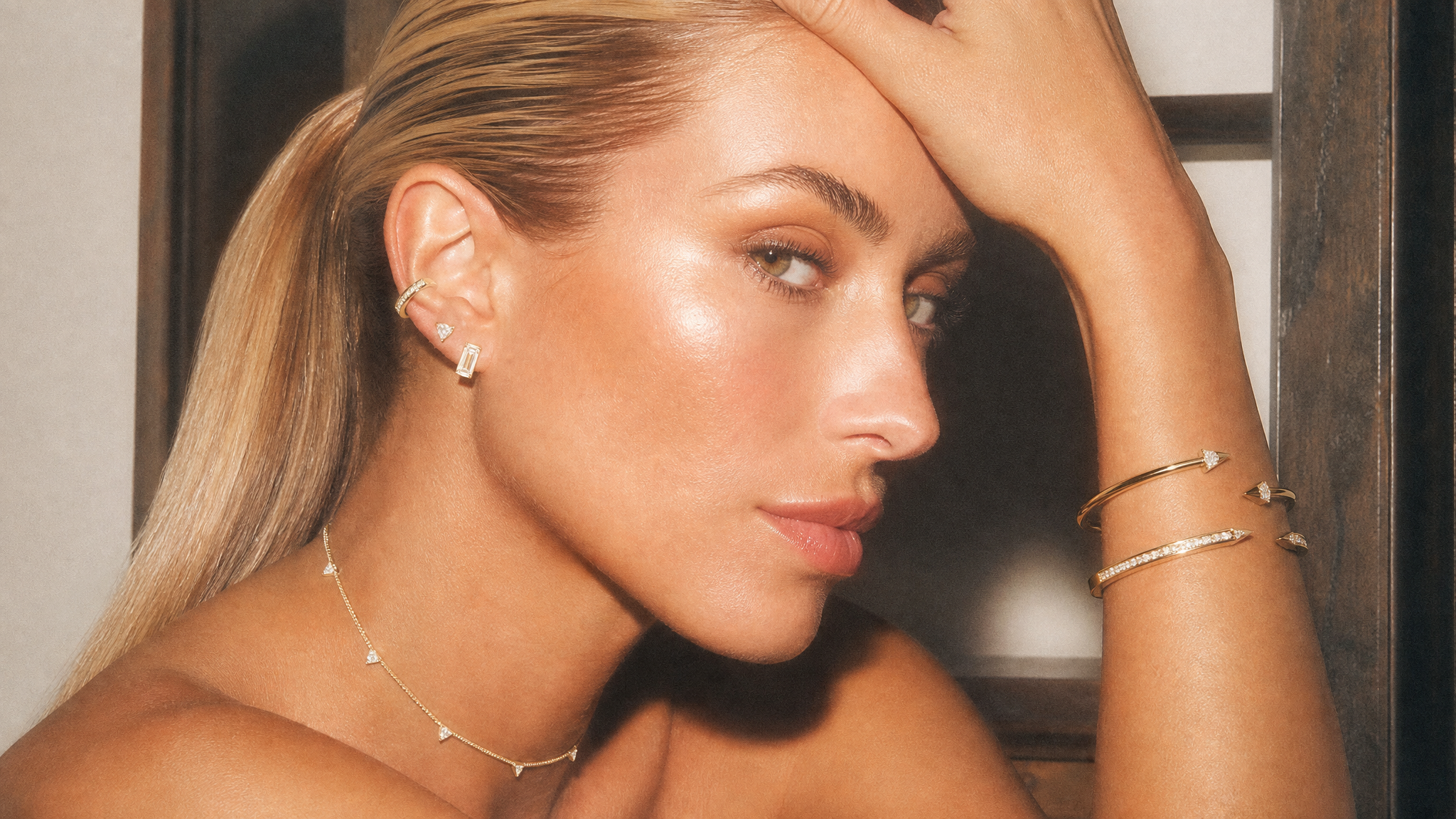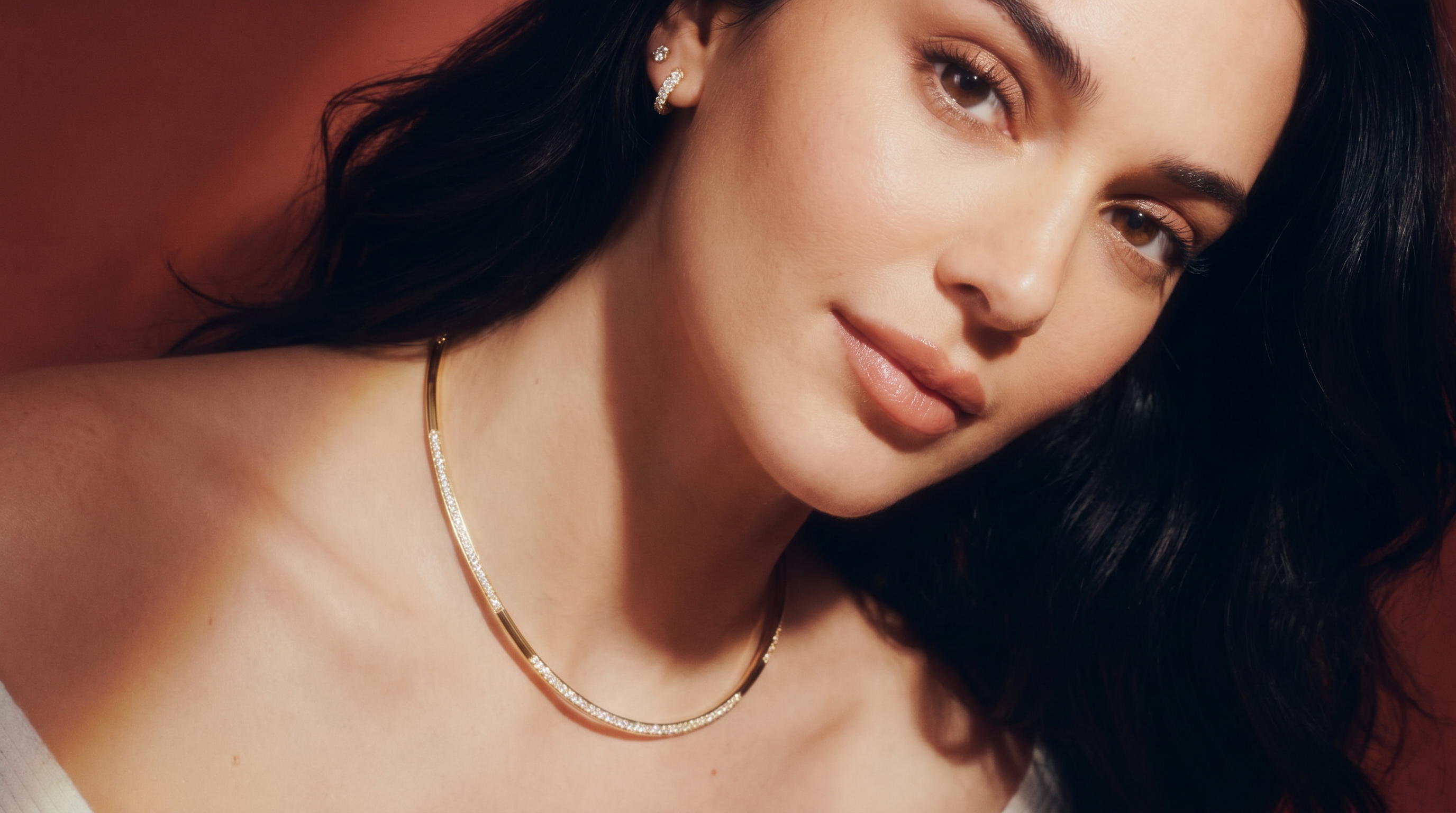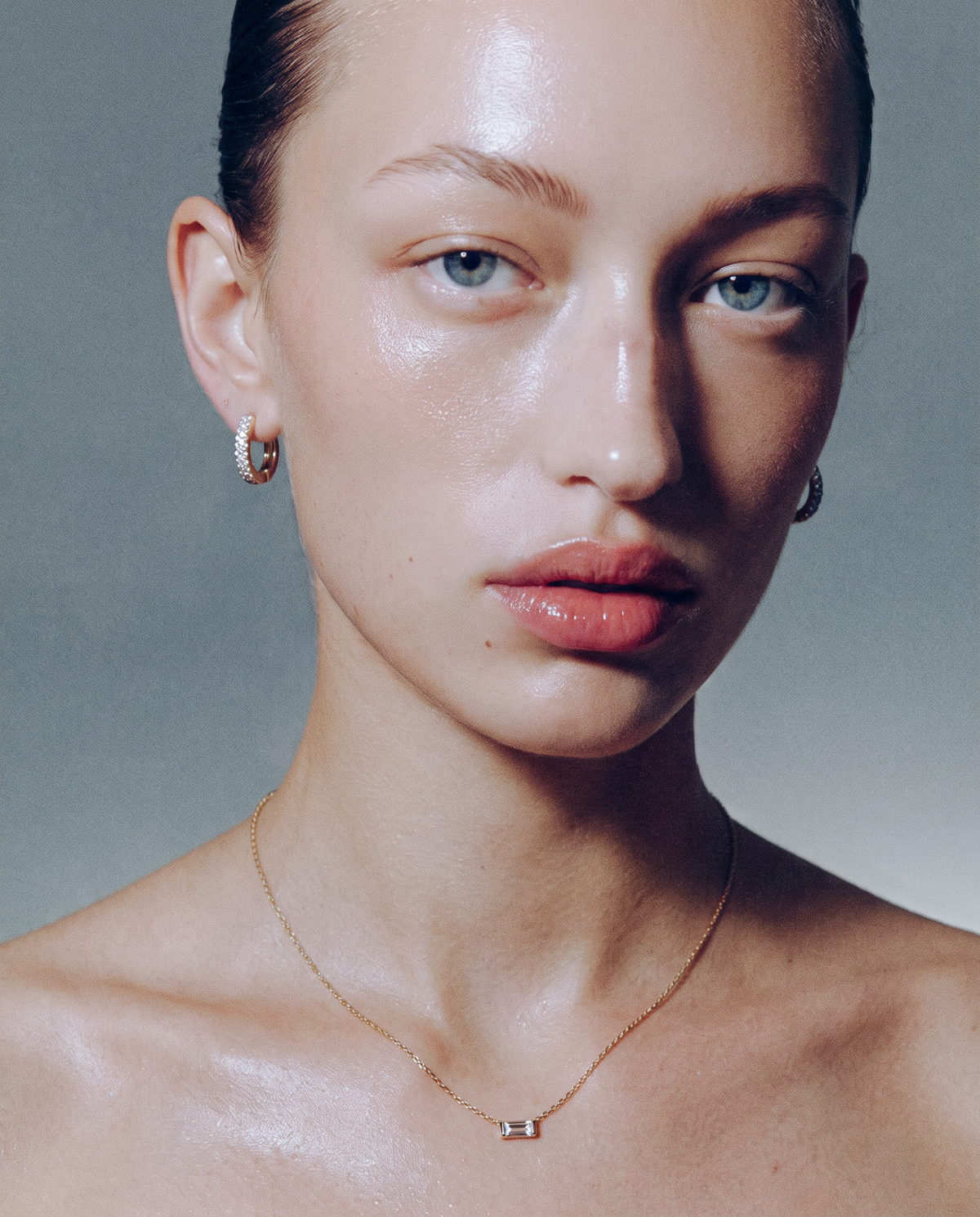


How to Choose the Right Gold Earrings for Your Face Shape
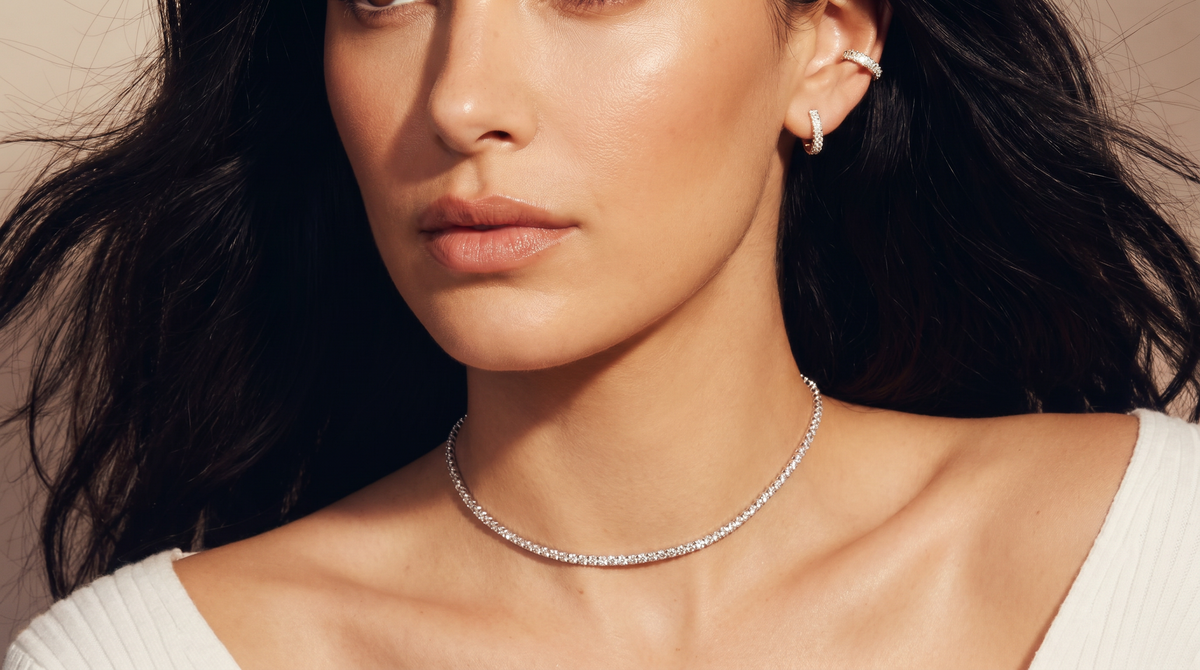
The right earring for your face shape is not about following a rigid rule. It is about understanding how earring size, shape, and length interact with the proportions of your face, and using that understanding to make a more deliberate choice. A hoop that looks effortless on one person can feel overwhelming on another, not because of personal taste, but because of geometry.
This guide covers the main face shapes, which earring styles work best with each, and why the logic behind those recommendations actually holds up. It also covers what to do when your face does not fit neatly into one category, which is more common than most styling guides acknowledge.
How to Identify Your Face Shape
Pull your hair back and look straight into a mirror. The outline of your face from hairline to jaw is your face shape. Most faces fall into one of five broad categories, though many people sit between two.
- Oval: Forehead slightly wider than the jaw, face length roughly one and a half times the width, cheekbones are the widest point.
- Round: Width and length are roughly equal, soft jaw, full cheeks, no strong angles.
- Square: Forehead, cheekbones, and jaw are roughly equal in width, strong angular jaw.
- Heart: Wide forehead, high cheekbones, narrow jaw and chin.
- Oblong or rectangular: Face is noticeably longer than it is wide, forehead and jaw are similar in width, cheeks are relatively flat.
If you are between two shapes, read both sections and look for the overlap. The recommendations are not mutually exclusive.
Oval Face Shape: What Earrings Work Best?
An oval face has balanced proportions with no single feature that dominates. This means most earring styles work well, but the most flattering choices are those that maintain rather than disrupt that balance.
Small to medium hoops at 12 to 20mm sit well with an oval face because they echo the curved geometry of the face without adding width or length. A simple stud reads as clean and proportionate. A short drop earring adds a small amount of length without elongating the face past its natural balance.
The one style to approach with care on an oval face is a very large hoop or a very long drop earring. These can shift the visual balance of the face by adding significant width or length where none is needed. That said, an oval face has enough natural balance to carry most styles if the rest of the look is kept simple.
Browse gold earrings to find hoops and studs that suit an oval face.
Round Face Shape: What Earrings Work Best?
A round face has soft curves and roughly equal width and length. Earrings that add vertical length or create a downward line tend to be the most flattering because they visually elongate the face and create the impression of more defined proportions.
Drop earrings and linear styles work particularly well. A small pendant drop at 2 to 3cm draws the eye downward and adds length without adding width. Oval or elongated hoops, where the height is greater than the width, have a similar effect. Small studs are a clean everyday option that does not add width.
Large round hoops are the style most likely to work against a round face shape. A circular hoop mirrors the circular geometry of the face and can make the face appear wider. This is not a hard rule, but it is worth being aware of. A smaller hoop at under 14mm reads differently than a 30mm hoop on the same face.
Why Vertical Length Flatters a Round Face
The eye follows lines. A drop earring creates a vertical line from the earlobe downward, which draws attention along the length of the face rather than across its width. This is the same principle behind why a V-neck neckline is considered flattering for round faces: both create a downward visual line that adds the impression of length.
Square Face Shape: What Earrings Work Best?
A square face has strong angular features, a defined jaw, and roughly equal width across the forehead, cheekbones, and jaw. Earrings that soften these angles or add length tend to work well. Earrings that mirror the angular geometry of the face can make the features appear more pronounced.
Round hoops are one of the most flattering styles for a square face because the curved shape contrasts with the angular jaw and softens the overall impression. A medium hoop at 16 to 22mm sits at a size that is visible without overwhelming the face. Small round studs have a similar softening effect at a more minimal scale.
Drop earrings with a curved or organic shape also work well. A straight linear drop can echo the angular jaw and feel too matched to the face shape. A drop with a slight curve or a rounded end creates contrast instead.
Very geometric earrings, sharp triangles, hard rectangles, or angular hoops, tend to reinforce the angularity of a square face rather than balancing it. This is not a reason to avoid them entirely, but it is worth knowing the effect they create.
Heart Face Shape: What Earrings Work Best?
A heart face is wider at the forehead and narrows toward the chin. The styling goal is usually to balance the wider upper face with the narrower lower face, which means adding visual weight near the jaw rather than near the temples.
Drop earrings that widen slightly toward the bottom, such as a teardrop shape or a small chandelier style, add visual weight at the jaw level and create a more balanced impression. A medium hoop that sits below the earlobe has a similar effect by drawing attention to the lower part of the face.
Small studs work well for a clean everyday look without adding width at the forehead level. Very wide or large hoops that sit at ear level can emphasise the width of the upper face, which is the opposite of the balancing effect most people with a heart face are looking for.
Why Drop Earrings Balance a Heart Face
The widest point of a heart face is the forehead. A drop earring that hangs below the earlobe shifts visual attention downward toward the narrower jaw. This creates the impression of more even proportions across the face. The effect is subtle but consistent, which is why drop styles are so frequently recommended for this face shape.
Oblong or Rectangular Face Shape: What Earrings Work Best?
An oblong face is longer than it is wide, with a relatively uniform width from forehead to jaw. Earrings that add width rather than length tend to be the most flattering because they visually widen the face and create more balanced proportions.
Wide hoops are one of the best styles for an oblong face. A hoop where the width is greater than the height adds horizontal visual weight at the sides of the face, which creates the impression of a wider, more balanced face shape. A round hoop at 20 to 30mm works well here.
Stud earrings with a slightly wider face, such as a small geometric shape or a circular stud, also add a small amount of width without the drama of a large hoop. Short drop earrings that do not extend far below the earlobe are a clean option that avoids adding more length to an already long face.
Very long drop earrings are the style most likely to work against an oblong face. They add vertical length to a face that already has more length than width, which can make the face appear even longer. This is a proportion issue rather than a style issue, and the effect is more pronounced with longer drops.
Earring Size and Face Proportion: The Underlying Logic
Face shape recommendations work because of a simple principle: earrings that contrast with the dominant geometry of a face create visual balance, while earrings that mirror it amplify existing features.
A round face with round hoops amplifies the circular geometry. A square face with angular earrings amplifies the angularity. A heart face with wide hoops at ear level amplifies the width of the upper face. In each case, the earring is reinforcing what is already there rather than creating balance.
Contrast does not mean dramatic. A small round stud on a square face creates gentle contrast. A medium oval hoop on a round face creates moderate contrast. The degree of contrast is a matter of personal preference. The principle is the same regardless of scale.
Hoop Size and Face Scale
Beyond face shape, the overall scale of your face affects which hoop size reads as proportionate. A smaller face with a 30mm hoop can look like the earring is wearing the person. A larger face with a 10mm hoop can look like the earring is too small to register.
A practical starting point: hold a hoop against your ear before buying and check whether it sits within the width of your face or extends beyond it. A hoop that extends significantly beyond the face width tends to read as large regardless of the face shape. A hoop that sits within the face width reads as proportionate.
| Hoop Size | Best For | Effect |
|---|---|---|
| Under 12mm | All face shapes, minimal look | Subtle, professional, easy to layer with a second earring |
| 14 to 20mm | Most face shapes, everyday wear | Visible and intentional without being dramatic |
| 22 to 30mm | Oval, oblong, square faces | Adds width, creates presence, shifts the mood of an outfit |
| 30mm and above | Oval, oblong faces, statement looks | Dramatic, changes the energy of the look significantly |
Studs vs Hoops vs Drops: Which Is Right for Daily Wear?
For everyday wear, the most practical earring is one you can put on without thinking about it and that works across most of what you wear. Studs and small hoops both meet this standard. Drops require slightly more consideration because they move, can catch on clothing, and change the formality of a look more noticeably.
| Style | Best Face Shapes | Best For | Daily Wear Practicality |
|---|---|---|---|
| Stud | All face shapes | Minimal everyday look, layering with a second earring | Very high |
| Small hoop (under 14mm) | All face shapes | Everyday anchor earring, subtle movement | Very high |
| Medium hoop (14 to 22mm) | Oval, square, oblong | Everyday statement, versatile across outfits | High |
| Large hoop (22mm and above) | Oval, oblong | Statement look, evening, weekend wear | Moderate |
| Short drop (under 2cm) | Round, heart, oval | Adding length, slightly more dressed look | High |
| Long drop (2cm and above) | Round, heart | Evening, occasion wear, deliberate styling | Low to moderate |
Explore the full range of gold earrings across studs, hoops, and drops.
What If Your Face Does Not Fit One Category?
Most faces sit between two shapes rather than fitting cleanly into one. A face that is mostly oval with a slightly stronger jaw has elements of both oval and square. A face that is mostly round with a slightly pointed chin has elements of both round and heart.
In these cases, read the recommendations for both shapes and look for the styles that appear in both. A medium hoop, for example, works well for oval, square, and oblong faces. A small stud works for almost every face shape. Starting with styles that appear across multiple categories gives you the most flexibility.
The other practical approach is to try earrings on rather than buying based on description alone. Face shape guidelines are a useful starting point, not a definitive answer. How an earring actually looks on your face, with your hair, against your skin tone, is more reliable than any chart.
Gold Tone and Skin Tone: A Brief Note
Face shape affects which earring silhouette works best. Skin tone affects which metal tone looks most natural against the face. Yellow gold tends to complement warm and olive skin tones particularly well, creating a cohesive warmth rather than a stark contrast. On cooler skin tones, yellow gold creates a more deliberate contrast that can read as striking rather than seamless.
Neither effect is wrong. It is worth knowing which you are working with so the choice is intentional. DEBACQ pieces use a consistent 18k yellow gold tone across all earring styles, which makes it straightforward to compare how the same metal tone reads across different silhouettes.
The bestsellers include the earring styles that have proven most versatile across different face shapes and skin tones.
Frequently Asked Questions
What earrings suit a round face?
Drop earrings and elongated styles work best for a round face because they add vertical length and draw the eye downward, creating the impression of more defined proportions. Small studs are a clean everyday option. Large round hoops tend to add width and mirror the circular geometry of the face, which can make it appear wider.
What earrings suit a square face?
Round hoops and curved drop earrings work well for a square face because they contrast with the angular jaw and soften the overall impression. A medium round hoop at 16 to 22mm is one of the most flattering everyday options. Very geometric or angular earrings tend to reinforce the angularity of the jaw rather than balancing it.
What earrings suit a heart-shaped face?
Drop earrings that widen slightly toward the bottom add visual weight near the jaw and balance the wider forehead. Medium hoops that hang below the earlobe have a similar effect. Small studs work well for a minimal everyday look. Wide hoops at ear level can emphasise the width of the upper face.
What earrings suit an oval face?
Most earring styles work well with an oval face because the proportions are already balanced. Small to medium hoops, studs, and short drops are all reliable everyday choices. Very large hoops or very long drops can shift the balance of the face, but an oval face has enough natural proportion to carry most styles.
Does hoop size matter for face shape?
Yes. A hoop that extends significantly beyond the width of the face reads as large regardless of face shape. A hoop that sits within the face width reads as proportionate. As a general guide, hoops under 20mm work for most face shapes and sizes. Hoops above 25mm are most flattering on oval and oblong faces where the additional width does not disrupt the face's natural balance.
Can you wear any earring style regardless of face shape?
Yes. Face shape guidelines are a useful starting point for understanding proportion and contrast, not a set of restrictions. Many people wear styles that do not follow the standard recommendations and look excellent doing so. The guidelines help explain why certain combinations feel off, but personal preference, hair, and overall styling context all play a role that no chart can fully account for.