

How to Choose the Right Necklace Length for Your Neckline

The right necklace length is not about personal preference alone. It is about geometry. A chain that sits at the wrong point relative to your neckline either disappears into the fabric or competes with it. Get the length right and the necklace looks like it belongs. Get it wrong and even a beautiful piece feels off without knowing why.
This guide covers every standard necklace length, which necklines each one works with, and the logic behind why certain combinations succeed. It also covers layering, proportions, and how to build a necklace wardrobe that works across different outfits.
Necklace Length Chart: A Quick Reference Guide
Use this as a starting point. Exact placement varies slightly depending on neck length and body proportions, but these ranges apply to most people.
| Length | Where It Sits | Best Necklines | Best For |
|---|---|---|---|
| 14 inches | Base of the neck / choker | Off-shoulder, strapless, boat neck | Statement choker, layering base |
| 16 inches | At the collarbone | Crew neck, scoop neck, square neck | Everyday anchor piece |
| 18 inches | Just below the collarbone | V-neck, open collar, button-down | Layering second piece, pendants |
| 20 inches | Upper chest | Deep V-neck, wrap dress, open shirt | Longer pendants, statement chains |
| 22 to 24 inches | Mid-chest | Deep V, plunging neckline, casual tops | Layering third piece, relaxed styling |
| 28 to 36 inches | Below chest / opera length | Any neckline | Doubling, knotting, dramatic layering |
Which Necklace Length Works With Each Neckline?
Crew Neck
A crew neck sits high on the neck, which means a necklace needs to sit above the fabric edge to be visible. A 16-inch chain at the collarbone is the most reliable choice. It clears the neckline cleanly and reads as intentional. An 18-inch chain may sit right at the fabric edge depending on the garment, which can look awkward. Avoid longer lengths with a crew neck unless you are layering and the longer piece is clearly visible below the hem.
V-Neck
A V-neck creates a natural downward line that draws the eye toward the chest. A necklace that follows this line reinforces the shape of the neckline rather than interrupting it. An 18-inch chain sits just below the collarbone and echoes the V without competing with it. A 20-inch chain with a small pendant works well with a deeper V. Avoid a 16-inch chain with a V-neck, as it tends to sit above the neckline and creates a visual disconnect between the jewelry and the garment.
Scoop Neck
A scoop neck is curved and sits lower than a crew neck, giving more room for a necklace to be visible. A 16-inch chain at the collarbone sits above the neckline and works well. An 18-inch chain that dips slightly into the scoop also works, particularly with a pendant. The key is that the necklace should not sit exactly at the fabric edge, as this creates a cluttered line. Either clearly above or clearly below the neckline reads better than right at it.
Square Neck
A square neckline has a strong horizontal line across the chest. A necklace that mirrors this geometry works best. A short chain at 14 to 16 inches that sits just above the square edge reinforces the structured shape of the neckline. A longer chain that dips below the square can also work, but a pendant that hangs into the open neckline area tends to look more deliberate than a plain chain at the same length.
Off-Shoulder and Strapless
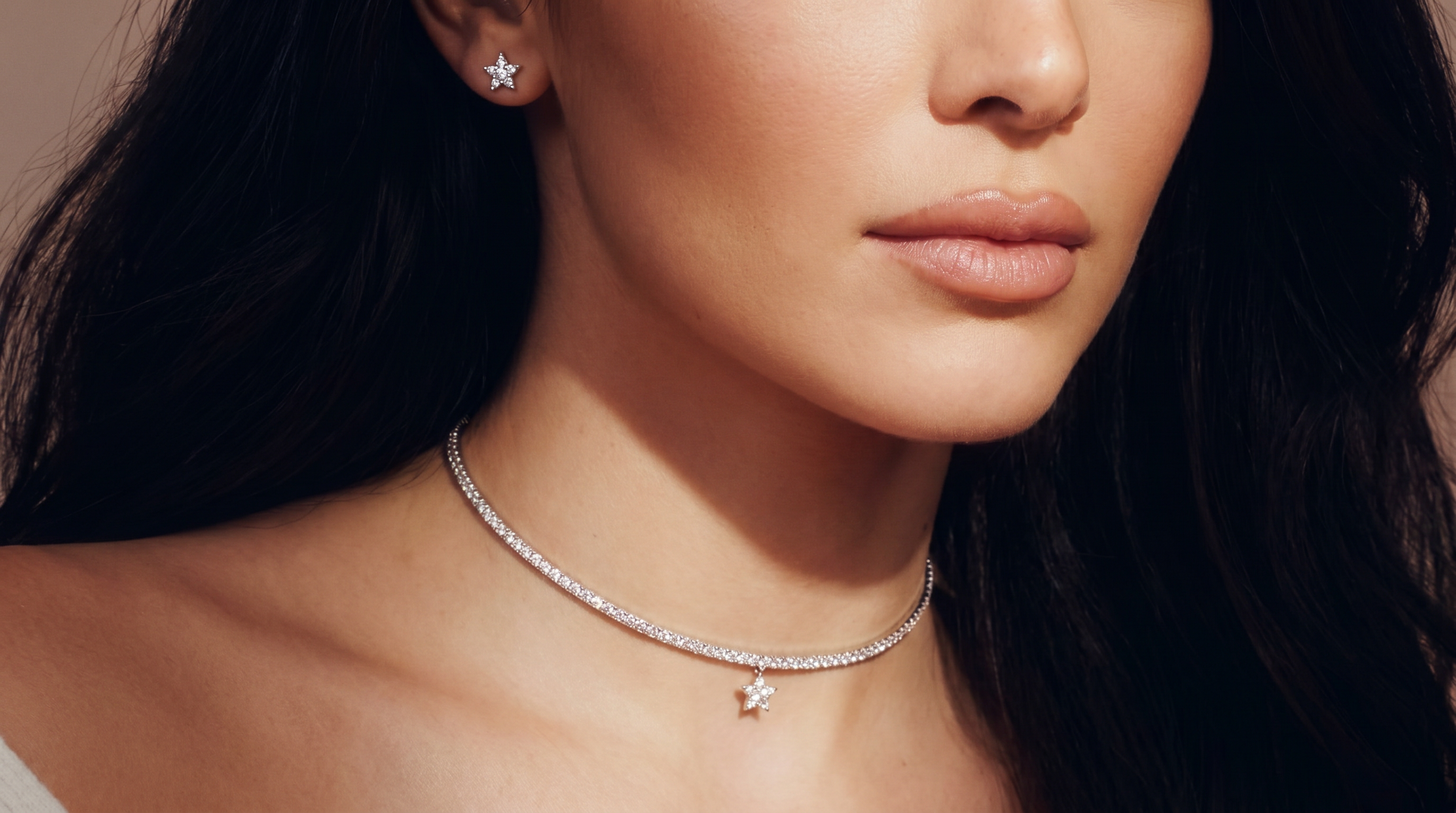
With no fabric at the neck or shoulders, the collarbone and upper chest become the focal point. A 14-inch choker-length chain or a 16-inch collarbone chain both work well here. The necklace has nothing to compete with, so even a very delicate chain reads clearly. This is one of the few necklines where a choker length feels natural rather than constrictive.
Turtleneck
A turtleneck covers the neck entirely, which means a standard 16 or 18-inch chain will sit on top of the fabric rather than against skin. This changes the look significantly. A longer chain at 22 to 28 inches that hangs below the turtleneck hem works better. Alternatively, skip the necklace entirely and focus on earrings or a bracelet. Wearing a short necklace over a turtleneck can work as a deliberate styling choice, but it reads as layered rather than seamless.
Boat Neck
A boat neck is wide and sits close to the collarbone, similar to a crew neck but with a more horizontal opening. A 14 to 16-inch chain that sits at or just above the neckline works well. Because the boat neck already creates a strong horizontal line, a necklace that echoes this line at a similar length feels cohesive. Avoid pendants that hang below the neckline, as they can look mismatched with the clean horizontal geometry of the collar.
Open Collar and Button-Down Shirts
An open collar creates a natural V shape that changes depending on how many buttons are undone. An 18-inch chain works well with a slightly open collar. As the collar opens further, a 20-inch chain follows the line more naturally. The necklace should sit inside the open collar area, not above it, for the look to feel intentional.
How Neck Length Affects Necklace Placement
Standard necklace lengths are measured from clasp to clasp, but where a chain actually sits depends on neck length as much as chain length. On a longer neck, a 16-inch chain may sit slightly lower than the collarbone. On a shorter neck, the same chain may sit higher, closer to the base of the neck.
This is worth knowing before buying. If you have a longer neck and want a collarbone-length chain, you may need an 18-inch rather than a 16-inch. If you have a shorter neck and want a chain that sits just below the collarbone, a 16-inch may already achieve that.
The practical solution is to measure with a piece of string or a soft tape measure before ordering, holding it at the length you want and checking where it falls relative to your collarbone and neckline.
How to Layer Necklaces by Length
Layering necklaces works when each chain is clearly visible and distinct from the others. The two rules that make layering work are length separation and scale variation.
Length separation: Keep at least 2 inches between each necklace. A 16-inch and an 18-inch chain worn together is the most reliable everyday combination. A 16, 18, and 20-inch stack creates a three-layer look that still reads as clean rather than cluttered.
Scale variation: Mixing a very fine chain with a slightly heavier one adds visual interest and also prevents tangling. Two chains of identical weight and link style will catch on each other and be difficult to separate.
A practical starting point for layering:
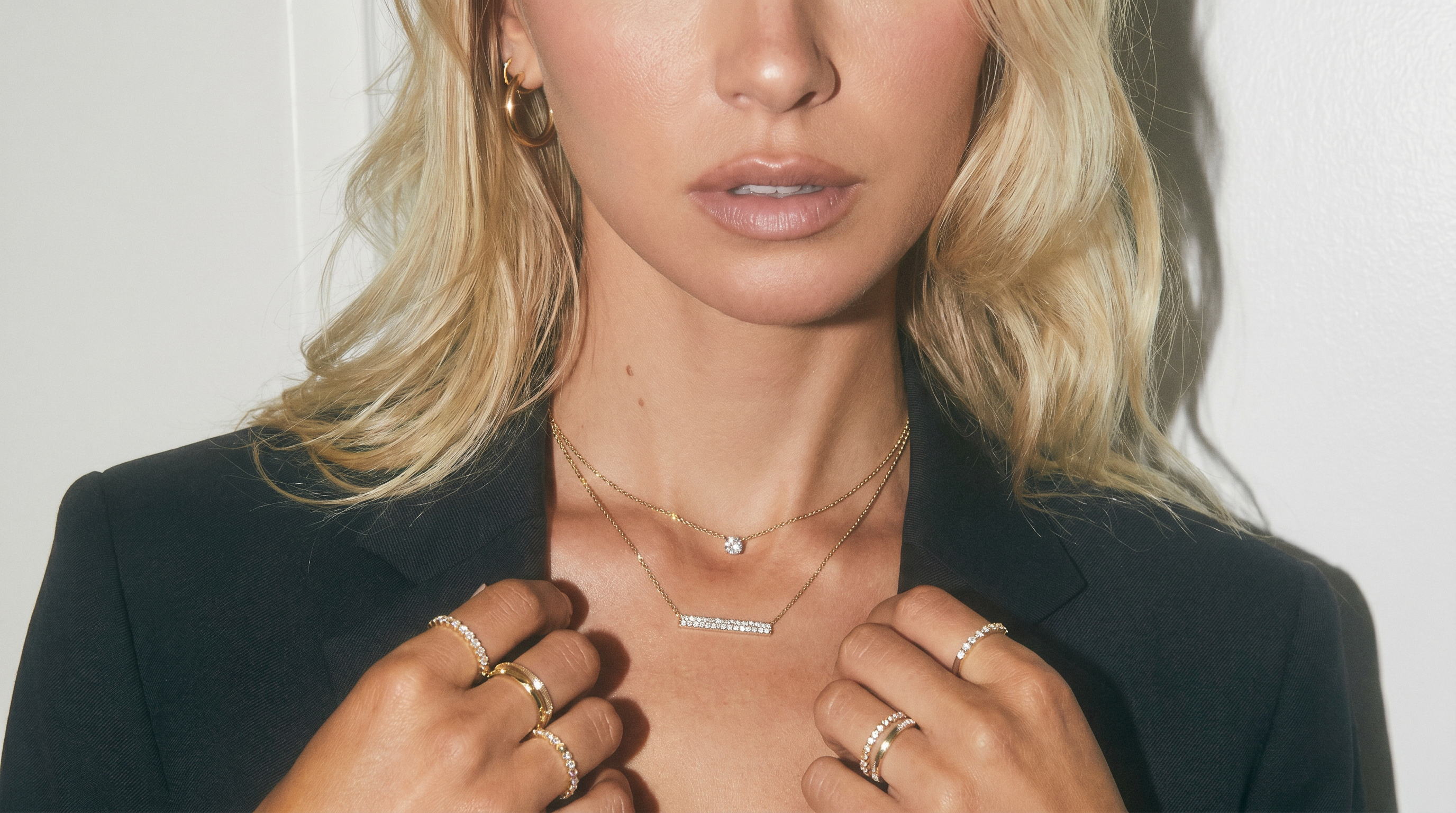
- First layer: 16-inch plain chain as the anchor
- Second layer: 18-inch chain with a small pendant or a slightly different link style
- Third layer (optional): 20 to 22-inch chain, finer or longer to create depth
Explore gold necklaces to find chains that layer well together.
Pendant Necklaces: Does Length Change With the Pendant?
Yes. A pendant adds visual weight and draws the eye to the point where it hangs. This changes how the length reads compared to a plain chain.
A small pendant on an 18-inch chain sits just below the collarbone and works with most necklines. A larger or heavier pendant on the same chain can feel like it is competing with the neckline if the pendant sits right at the fabric edge. In that case, moving to a 20-inch chain so the pendant hangs clearly below the neckline resolves the conflict.
The general principle: the larger the pendant, the longer the chain should be to give it space to read clearly without crowding the neckline.
Necklace Length and Body Proportions
Necklace length interacts with body proportions in ways that go beyond neckline matching. A longer chain on a petite frame can visually elongate the torso, which is often a flattering effect. The same chain on a taller frame may disappear into the mid-chest without creating the same visual impact.
For petite frames, 16 to 18-inch chains tend to be the most proportionate for everyday wear. Longer chains at 22 to 24 inches can work but may feel like they are wearing the person rather than the other way around.
For taller frames, longer chains at 18 to 22 inches often read better as a single piece. The extra length gives the chain room to be visible and to create a line rather than sitting in a small area near the collarbone.
The Case for Owning Two or Three Lengths
Rather than searching for one necklace that works with everything, a more practical approach is owning two or three chains at different lengths that can be worn alone or layered.
A 16-inch chain covers crew necks, scoop necks, and square necklines. An 18-inch chain covers V-necks, open collars, and works as a second layer with the 16-inch. A 20 to 22-inch chain handles deeper necklines and adds a third layer when needed.
Three chains at these lengths, all in the same metal tone, give you more styling flexibility than six chains that do not work together. This is the logic behind building a small, intentional jewelry wardrobe rather than accumulating pieces without a system.
The everyday essentials collection is a good place to start building this kind of rotation.
Gold Necklace Care: Keeping the Finish Consistent Across Lengths
When wearing multiple gold necklaces together, consistency of finish matters. A chain that has started to show wear next to one in perfect condition creates an uneven look that undermines the layered effect.
DEBACQ necklaces use 18k yellow gold plating over the DEBACQ Yellow Alloy, a base formulated from 95% recycled material with anti-tarnish properties. This means the finish stays consistent across pieces worn together, which is particularly important when layering.
Basic care habits that extend the life of the finish:
- Remove necklaces before showering, swimming, or applying skincare and fragrance
- Store chains separately or hang them to prevent tangling and scratching
- Wipe with a soft dry cloth after wearing
- Avoid contact with perfume, which is one of the fastest ways to degrade gold plating
Do and Don't: Necklace Length Styling
| Do | Don't |
|---|---|
| Match necklace length to neckline geometry | Wear a short chain that disappears under a high neckline |
| Keep at least 2 inches between layered chains | Layer two chains of the same length |
| Consider neck length when choosing chain length | Assume standard lengths will sit the same on every person |
| Give larger pendants more chain length to breathe | Hang a large pendant on a chain that places it at the fabric edge |
| Build a small rotation of two to three lengths | Search for one chain that works with every neckline |
| Store chains separately to preserve finish | Leave chains tangled together in a drawer |
Frequently Asked Questions
What necklace length is most versatile for everyday wear?
16 to 18 inches is the most versatile range for everyday wear. A 16-inch chain sits at the collarbone and works with crew necks, scoop necks, and square necklines. An 18-inch chain sits just below the collarbone and works with V-necks, open collars, and as a second layer in a stack.
What necklace length should you wear with a V-neck?
An 18-inch chain is the most reliable choice for a V-neck. It sits just below the collarbone and follows the downward line of the neckline without competing with it. A 20-inch chain with a small pendant also works well with a deeper V-neck.
Can you wear a necklace with a turtleneck?
Yes, but the approach is different. A chain worn over a turtleneck sits on fabric rather than skin, which changes the look. A longer chain at 22 to 28 inches that hangs below the turtleneck hem works better than a short chain sitting on top of the fabric. Alternatively, focus on earrings or a bracelet instead.
How do you measure necklace length before buying?
Use a piece of string or a soft tape measure. Hold it at the length you are considering and check where it falls relative to your collarbone and the neckline of the top you plan to wear it with. This is more reliable than relying on standard length descriptions alone, since neck length affects where a chain actually sits.
What is the difference between a 16-inch and 18-inch necklace?
A 16-inch chain sits at the collarbone on most people. An 18-inch chain sits just below the collarbone. The 2-inch difference changes which necklines each length works with and determines whether two chains can be layered together without tangling.
How many necklaces can you layer at once?
Two to three necklaces is the practical limit for most everyday looks. Beyond three, the layers tend to tangle and the look becomes difficult to manage. Each chain should be at least 2 inches longer than the one above it, and mixing chain weights or styles helps prevent tangling and adds visual interest.