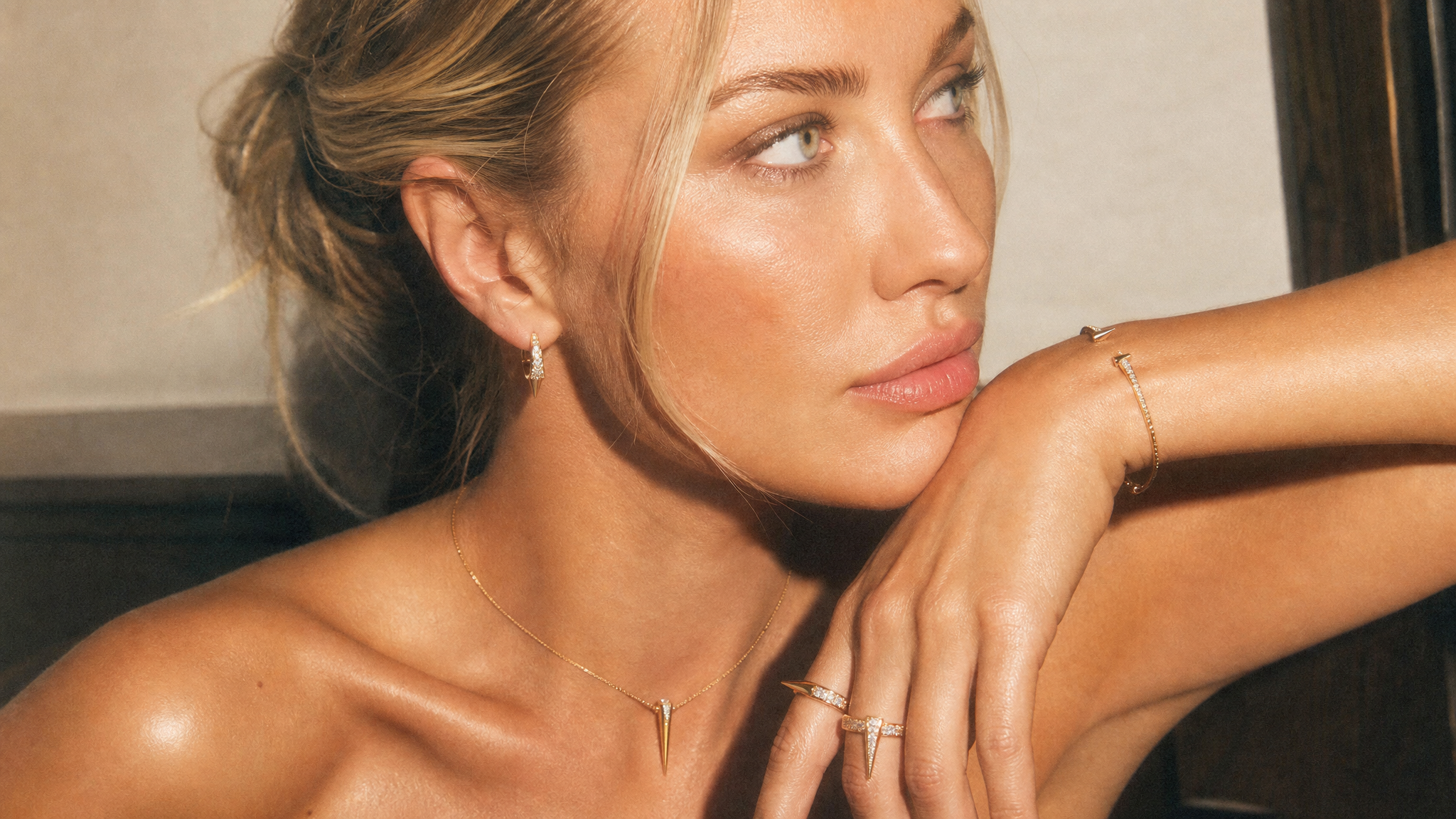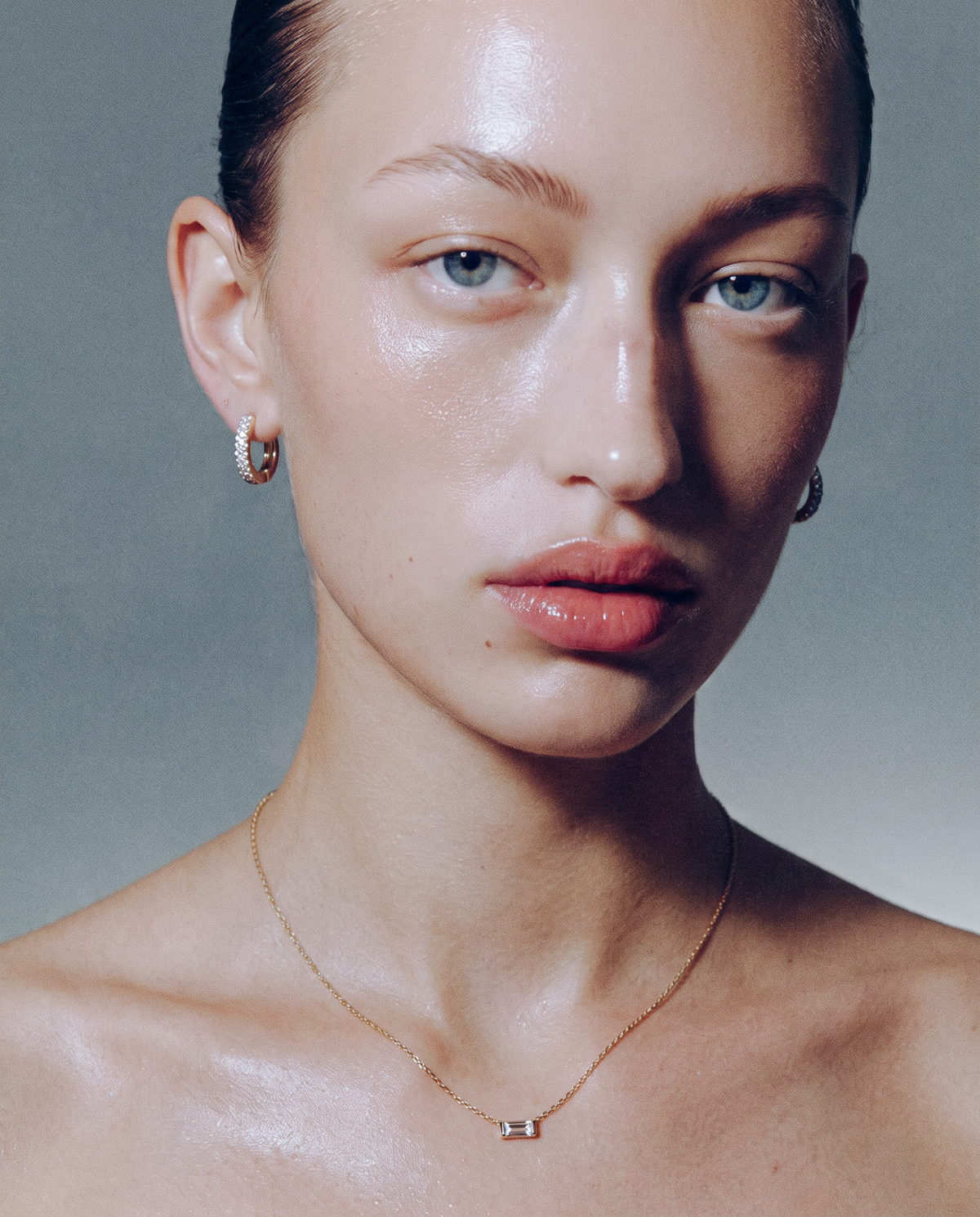


Article: How to Style Minimalist Gold Jewelry Every Day
How to Style Minimalist Gold Jewelry Every Day
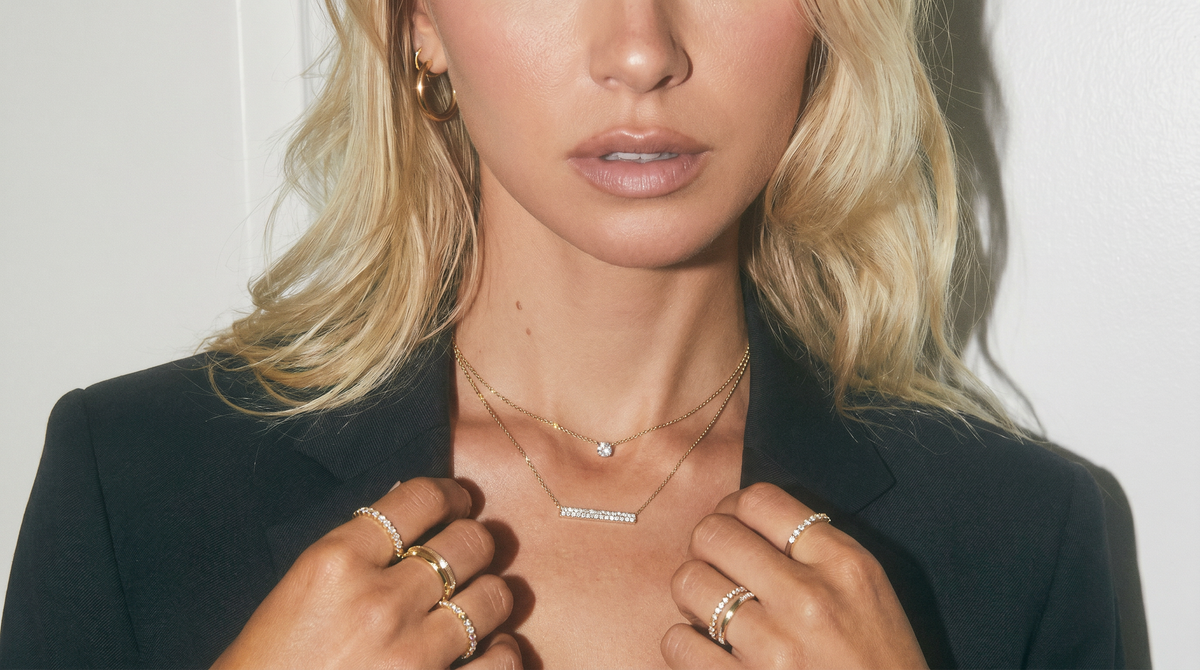
The most effective everyday jewelry look starts with one decision: choosing an anchor piece. A slim chain necklace, a small hoop, or a single ring worn consistently does more for your style than a different combination every day. Minimalist gold jewelry works because it is quiet enough to wear with anything and refined enough to elevate everything. The challenge is not finding pieces you love, it is learning how to wear them together without the look feeling random or overdone.
This guide covers the practical logic behind everyday gold styling, from proportions and layering to how gold tone interacts with what you wear.
What Is Minimalist Gold Jewelry?
Minimalist gold jewelry refers to pieces with clean lines, simple silhouettes, and no heavy ornamentation. Think thin bands, delicate chains, small geometric shapes, and understated hoops. The focus is on form and material rather than embellishment.
For daily wear, minimalist pieces work because they do not compete with clothing, they complement it. They are also practical: lighter weight, less likely to snag, and easier to layer without looking cluttered.
DEBACQ pieces are designed around this principle, using 18k yellow gold plating over the DEBACQ Yellow Alloy, a proprietary base made from 95% recycled material. The result is a warm, consistent gold tone that holds up to daily wear without tarnishing.
How Do You Style Minimalist Gold Jewelry Every Day?
Start with one anchor piece, usually a chain necklace, a small hoop, or a slim ring. Keep the rest of your jewelry close in scale so the look feels intentional rather than crowded.
The anchor piece is the one you reach for first. Everything else is built around it. If your anchor is a 16-inch chain necklace, a second necklace at 18 inches adds depth without competing. If your anchor is a small hoop, a second stud in the same ear keeps the look clean. If your anchor is a thin band on your index finger, a second ring on the middle or ring finger of the same hand creates a natural stack.
The rule is not about wearing less. It is about wearing with intention.
Choosing Your Anchor Piece
Your anchor piece should be the one you would wear even if you were only wearing one thing. It should feel like yours, not like a statement you have to justify.
Three reliable anchor options for everyday wear:
- A chain necklace at 16 to 18 inches. This length sits at or just below the collarbone and works with almost every neckline. It is visible without being prominent.
- A small hoop earring, 10 to 14mm. Small enough to wear to work, large enough to read as a deliberate choice. A hoop at this size adds movement without drama.
- A slim band ring. Worn alone, a thin band reads as effortless. It is the easiest piece to forget you are wearing, which is exactly what makes it work every day.
Browse everyday essentials to find pieces built for this kind of consistent wear.
How Necklace Length Changes the Look
Necklace length is one of the most underestimated styling decisions in everyday jewelry. The same chain at different lengths creates a completely different effect.
| Length | Where It Sits | Best With |
|---|---|---|
| 14 inches | At the base of the neck | High necklines, turtlenecks, layering as the shortest piece |
| 16 inches | At the collarbone | Crew necks, scoop necks, everyday layering anchor |
| 18 inches | Just below the collarbone | V-necks, open collars, second layer in a stack |
| 20 to 22 inches | Upper chest | Deep V-necks, open shirts, pendant necklaces |
When layering two necklaces, a 2-inch difference in length is the minimum needed to keep them from tangling and to make both visible. A 16-inch and an 18-inch chain worn together is the most reliable everyday combination.
A V-neckline draws the eye downward, so a necklace that follows that line at 18 to 20 inches feels natural. A crew neck or high neckline works better with a shorter chain at 16 inches that sits just above the fabric edge. Wearing a long necklace with a high neckline often means the chain disappears under the collar, which defeats the purpose.
Explore gold necklaces to find the right length for your daily rotation.
How Hoop Size Changes the Mood of an Outfit
Hoop earrings are one of the most versatile pieces in minimalist jewelry, but size matters more than most people realise.
- Under 12mm: Reads as subtle and polished. Works for professional settings, minimal looks, and everyday wear where you want jewelry to be present but not noticed.
- 14 to 20mm: The most versatile range. Visible enough to feel intentional, small enough to wear with almost anything. This is the everyday sweet spot.
- 25mm and above: Starts to shift the mood toward evening or statement dressing. Still wearable daily, but changes the energy of a look more noticeably.
A 12mm hoop with a white shirt and tailored trousers reads as quietly confident. The same outfit with a 30mm hoop reads as dressed up. Neither is wrong, but they are different decisions.
See the full range of gold earrings to find the size that fits your daily style.
Ring Stacking: Why Some Combinations Look Balanced
A ring stack looks balanced when the pieces share a visual logic, whether that is similar width, consistent spacing, or a deliberate contrast between one thicker and several thinner bands.
The most common mistake in stacking is mixing too many different widths without a clear hierarchy. A stack of three rings works best when two are similar in weight and one is slightly different, either thinner or with a small detail, to create a focal point without chaos.
Wrist and finger proportions also matter. On a narrower finger, a single slim band or two thin rings stacked together looks proportionate. Adding a third ring of the same width can start to look heavy. On a wider finger, a slightly chunkier band or three thin rings stacked together reads as balanced.
Spreading a stack across two fingers, for example the index and middle finger, creates a more editorial look. Keeping the stack on one finger is cleaner and easier to wear daily.
Browse minimalist gold rings to build your stack.
How Gold Tone Interacts With Fabric and Colour
Yellow gold has a warm undertone that interacts differently with fabric colours depending on the palette you are wearing.
- Warm neutrals (cream, camel, sand, terracotta): Yellow gold feels natural and cohesive. The tones reinforce each other.
- Cool neutrals (white, grey, navy, black): Yellow gold creates contrast. It reads as a deliberate accent rather than a blend.
- Earth tones (olive, rust, brown): Gold sits comfortably here. The warmth of the metal echoes the warmth of the palette.
- Bright or saturated colours: Gold can ground a bold outfit. A single delicate piece keeps the look from feeling too busy.
The texture of the fabric also plays a role. Gold against matte fabric like cotton or linen reads as clean and modern. Gold against silk or satin picks up the sheen of the material and feels more elevated. Neither is better, but it is worth being aware of the effect.
How Wrist Proportions Affect Bracelet Styling
A bracelet that fits well on a narrower wrist can look like it is floating on a wider wrist, and a bracelet sized for a wider wrist can feel tight and unflattering on a narrower one. Beyond fit, the visual weight of a bracelet should be proportionate to the wrist it is worn on.
On a narrower wrist, a single delicate chain bracelet is enough. Adding a second thin bracelet creates a layered look without overwhelming the wrist. On a wider wrist, a slightly chunkier chain or two to three thin bracelets stacked together reads as more balanced.
Mixing a chain bracelet with a bangle on the same wrist adds texture and dimension. The key is keeping the metals consistent, all yellow gold, so the combination feels curated rather than accidental.
Find gold bracelets designed for daily wear.
Building a Daily Jewelry Rotation
The most practical approach to everyday jewelry is not a single fixed combination. It is a small rotation of pieces that work together in different configurations.
A functional everyday rotation might look like this:
- One anchor necklace worn every day
- Two or three rings that can be worn alone or stacked
- One pair of small hoops and one pair of studs for earring variety
- One or two bracelets that can be worn together or separately
With six to eight pieces, you can create a different look each day without buying more jewelry. The pieces do not need to match exactly. They need to share a consistent metal tone and a similar scale.
Start with the bestsellers to find pieces that have already proven themselves as everyday staples.
Do and Don't: Everyday Gold Jewelry Styling
| Do | Don't |
|---|---|
| Choose one anchor piece and build around it | Add pieces without a clear starting point |
| Keep necklace lengths at least 2 inches apart when layering | Layer necklaces of the same length |
| Match metal tones across all pieces | Mix yellow gold and silver in the same look unless intentional |
| Consider neckline when choosing necklace length | Wear a long necklace with a high neckline |
| Scale jewelry to your proportions | Wear the same size on every person regardless of frame |
| Let one piece be the focal point | Give every piece equal visual weight |
Material and Care: What Makes Gold Jewelry Last Daily
For everyday wear, the durability of the metal matters as much as the design. DEBACQ pieces use 18k yellow gold plating over the DEBACQ Yellow Alloy, which is formulated to resist tarnishing and is hypoallergenic, making it suitable for sensitive skin and consistent daily wear.
To keep gold plated jewelry looking its best:
- Remove pieces before swimming, showering, or applying perfume and skincare
- Store pieces separately to avoid scratching
- Wipe with a soft dry cloth after wearing
- Avoid contact with harsh chemicals including cleaning products
Gold plated jewelry that is well cared for maintains its finish significantly longer than pieces worn without any care routine. The goal is not to treat jewelry as precious and untouchable, but to build simple habits that protect the finish over time.
Frequently Asked Questions
How many pieces of jewelry should you wear every day?
There is no fixed number, but three to five pieces is a practical range for most everyday looks. One necklace, one or two rings, and one pair of earrings covers most combinations without feeling overdone. The number matters less than whether the pieces work together in scale and tone.
Can you wear gold jewelry every day without it tarnishing?
Yes, with the right pieces and basic care. High-quality gold plated jewelry with an anti-tarnish formulation, like DEBACQ's DEBACQ Yellow Alloy base, is designed for daily wear. Avoiding water, perfume, and harsh chemicals extends the life of the finish significantly.
What is the best necklace length for everyday wear?
16 to 18 inches is the most versatile range for everyday wear. A 16-inch chain sits at the collarbone and works with most necklines. An 18-inch chain sits just below the collarbone and is the most common length for layering as a second piece.
How do you layer necklaces without them tangling?
Keep at least a 2-inch difference between each necklace length. Avoid chains with similar link styles, as they are more likely to catch on each other. Lighter, thinner chains tangle more easily than slightly heavier ones, so mixing a delicate chain with a slightly more substantial one can help.
What is minimalist jewelry?
Minimalist jewelry refers to pieces with simple, clean designs that prioritise form over ornamentation. Thin bands, delicate chains, small geometric shapes, and understated hoops are all examples. The focus is on the quality and tone of the material rather than decorative detail.
Is gold jewelry suitable for sensitive skin?
It depends on the base metal. Pure gold and high-quality gold plated pieces over hypoallergenic alloys are generally suitable for sensitive skin. DEBACQ pieces are hypoallergenic by design, making them appropriate for daily wear even for those with metal sensitivities. If you have a known nickel allergy, always check the base metal composition before purchasing.