

Can You Shower With Gold-Plated Jewelry?
Take gold-plated jewelry off before showering. Soap and prolonged moisture can affect the finish, so keeping your pieces dry is the better routine. If a DEBACQ piece gets wet, gently dry it before storing. Everyday jewelry does not mean jewelry you should leave on for every activity.
Why remove gold-plated jewelry before a shower?
Gold plating is a surface layer over another metal. The FTC's jewelry-buying guide explains that the coating eventually wears, with its thickness and the way the piece is worn affecting that process. A gold-colored surface is not a promise of permanent protection.
A shower also involves products, not only water. GIA's jewelry-care guidance warns that chemical exposure can damage or discolor jewelry. Follow the instructions for the complete piece, including its finish and settings, rather than treating a shower as a cleaning method.
DEBACQ's Materials & Care guidance applies this to plated finishes: take them off for showering and swimming.
Can you shower with 18K gold-plated jewelry?
The 18K number does not change that advice. Karat describes the proportion of gold in an alloy, as the Royal Society of Chemistry explains. It does not specify the coating's thickness or establish water resistance.
Read the whole description. An 18K gold-plated brass piece has a different construction from jewelry made throughout from gold alloy. Neither the karat number nor a photograph tells you that a necklace, ring or earring can stay on in the shower.
A splash, a shower or a swim?
- A shower or bath
- Take the jewelry off before you start. Trying to hold a necklace above the water is an awkward substitute for removing it.
- A swim
- Leave your pieces off in the pool or sea. A short swim is not a reason to override the care instructions.
- An accidental splash
- Dry the piece gently. Assess its condition rather than assuming that one wetting has either ruined it or proved it waterproof.
What should you do if your gold-plated jewelry gets wet?
Remove it and gently blot it with a soft, non-abrasive cloth. Make sure the piece is dry before returning it to its pouch. Do not scrub, use chemical dips or add a polishing compound.
If there is residue you cannot remove gently, or the finish has changed, ask for advice for that design before trying another treatment. Send the product name, what it was exposed to and a clear photograph through our contact page. That gives us more useful information than a description such as "it got wet."
A simple habit: jewelry goes on last
Finish showering and getting dressed, then allow skincare and perfume to dry before adding your jewelry. Choose a place outside the bathroom for the pieces you take off, rather than leaving them beside a basin or on the shower shelf.
A small tray on your dressing table can be a useful reminder: empty it when you put your jewelry on, and return the pieces before your next shower. It is a suggested routine, not another accessory you need to buy.
The finishing detail after getting ready
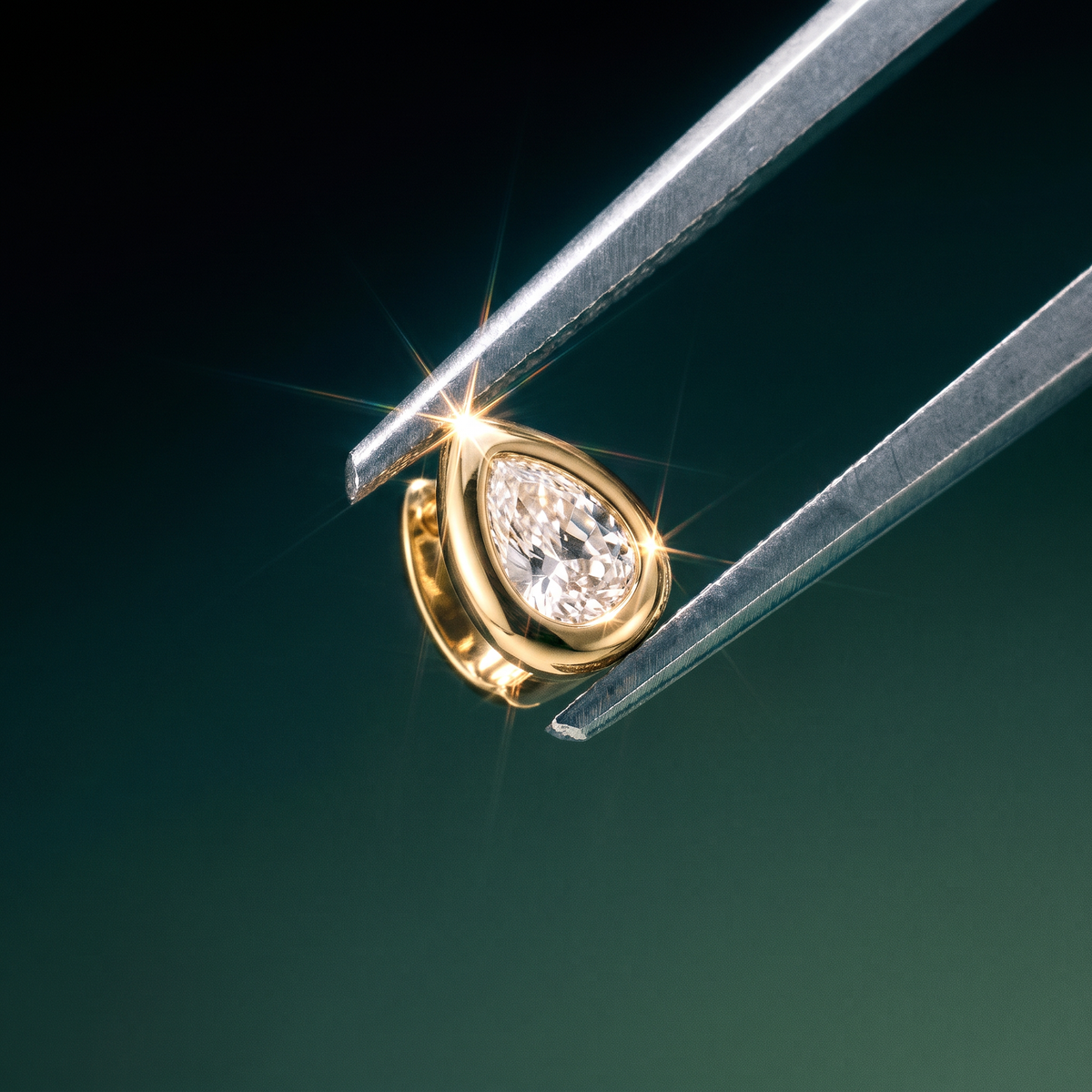
From Hoop & Huggie Earrings, the Sculpted Teardrop Hoops are one example of the materials discussed here. Choose them for the curved frame and single focal stone, not as earrings to leave on in water.
A product example from our collection, not a water-resistance test. Current prices and available finishes are on the product page.
Gold-plated jewelry and water: your questions
Does an anti-tarnish coating make jewelry waterproof?
Not for DEBACQ pieces. Our protective coating helps preserve the finish, but does not replace the removal-before-water guidance or make plating permanent.
Will one shower definitely ruin gold-plated jewelry?
The event alone cannot tell you the condition of the piece. Check it after drying and seek advice about any change. Equally, an unchanged appearance after one shower is not evidence that repeated showering is suitable.
Keep the jewelry. Change the habit.
Put your pieces aside before the shower and choose them again once you are ready. The full care guide explains cleaning, storage and what to do about a loose setting or clasp.
Materials & Care
Written by Ben Levante