


Size Guide
The proportions that feel like you.
Find your fit
Choose a category for measuring advice. Compare your measurements with the dimensions and available sizes on the product page.
Rings
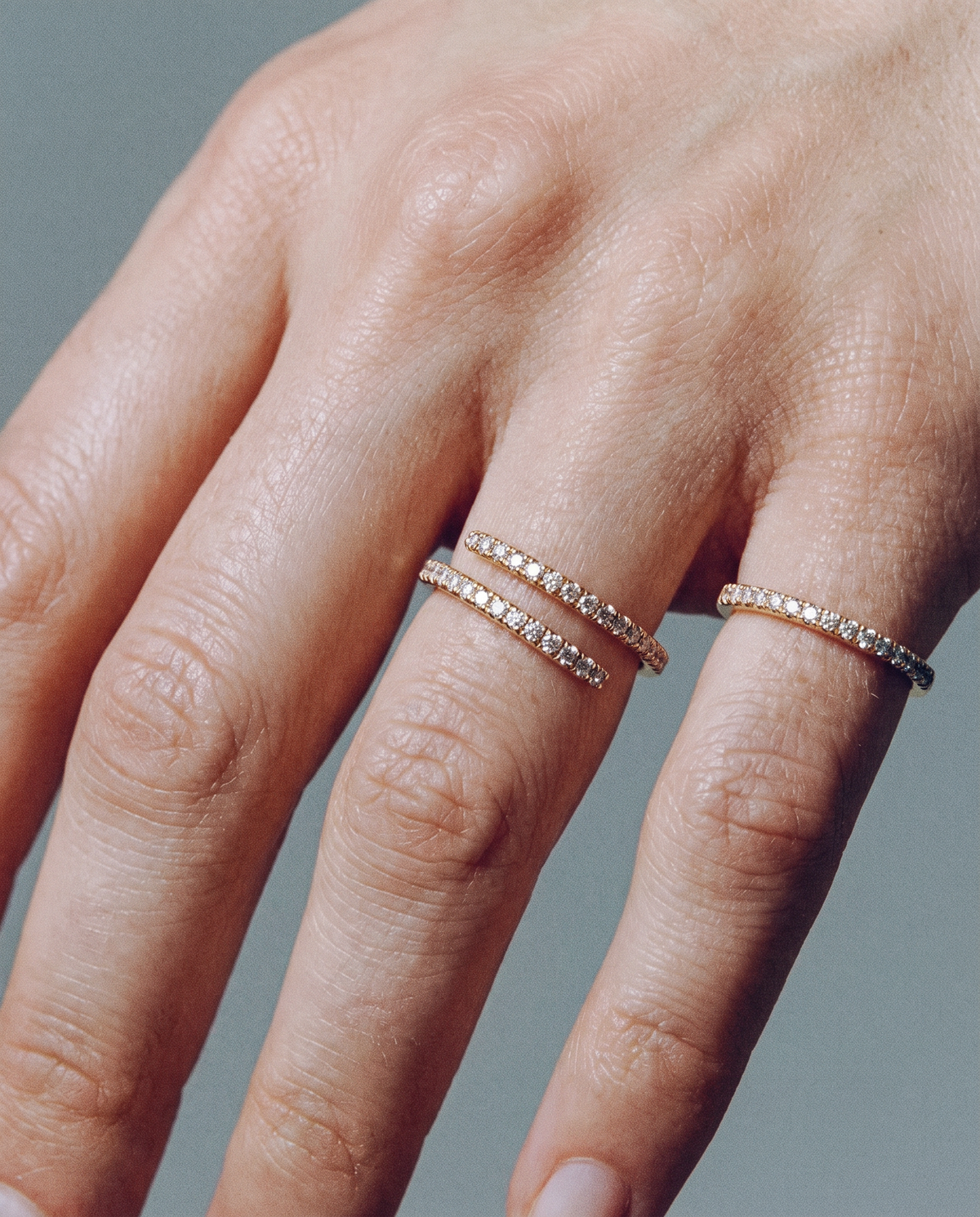
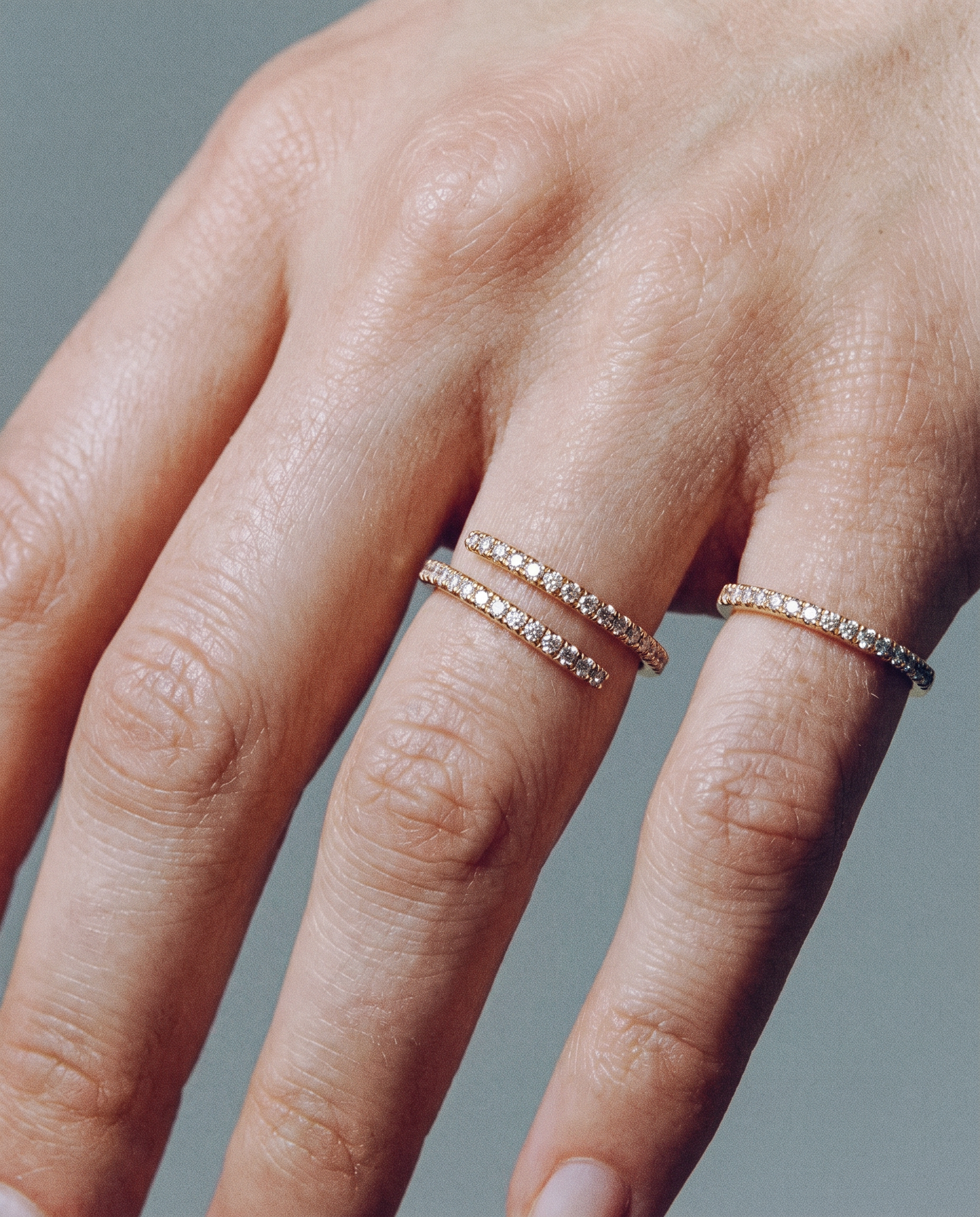
A ring that feels right
Measure the finger you plan to wear it on, or start with a ring that already fits that finger.
Start with the inside diameter
Measure straight across the inside of your ring, through the center, in millimeters. Do not include the metal. Compare with the conversion chart below.
Check the finger and knuckle
A non-stretch paper strip gives an approximate circumference. Mark where it meets, then measure it flat. Check that your chosen size also passes comfortably over the knuckle.
Consider the band
A wider band can feel closer-fitting. For an uncertain measurement or a wide design, have your finger measured by a jeweler before choosing.
Bracelets & bangles
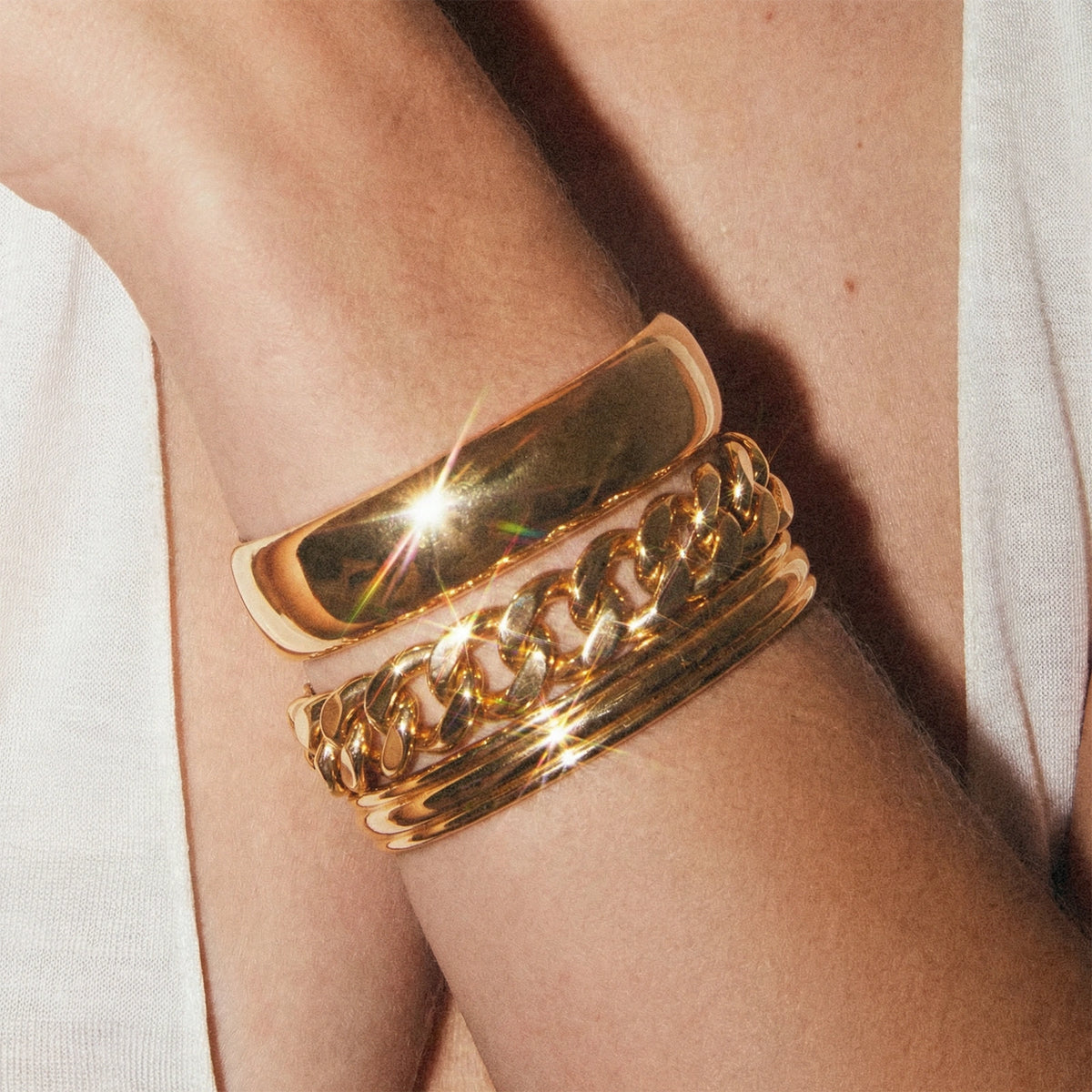
Room to move
The right measurement depends on how the piece opens and where you like it to sit.
For a bracelet with a clasp
Measure around your wrist where the bracelet will sit. Compare with the listed wearable length and extender, leaving the amount of movement you prefer.
For a closed bangle
Check the inside diameter or circumference and the widest part of your hand. A closed bangle must pass over the hand, not just fit the wrist.
For a hinged or open bangle
Use the listed inside dimensions and compare with a similar piece you own. Open the clasp as intended; do not force or repeatedly bend a fixed shape.
Necklaces
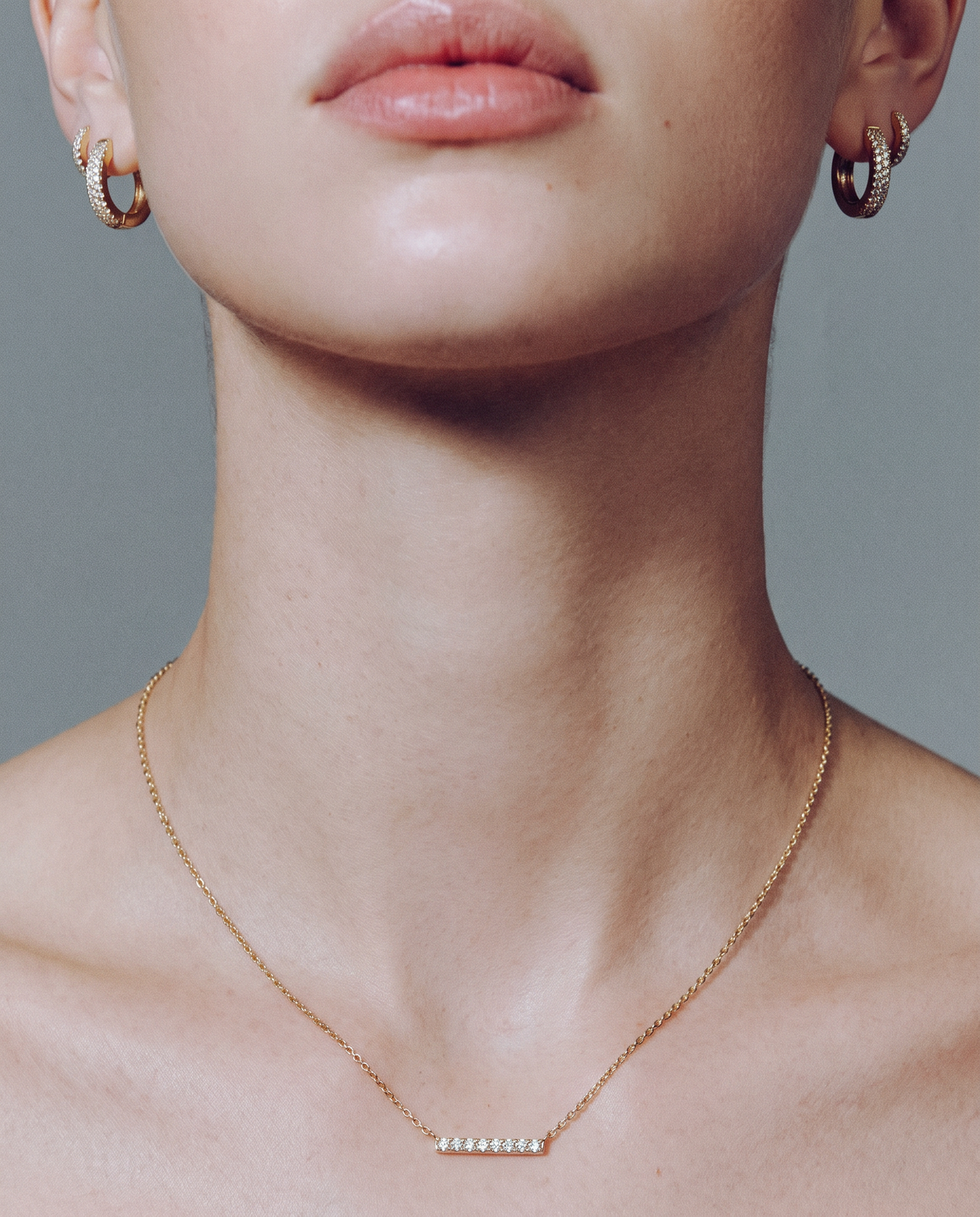
Find your length
The same chain length can sit differently depending on your proportions and neckline.
Map the length
Use a soft tape or a piece of string at the listed necklace length. Place it around your neck to see where the piece will rest.
Check the full design
Look for the chain length, extender range and any pendant dimensions on the product page. A pendant adds a drop below the chain.
Plan your layers
Try your intended lengths together before choosing. Leave enough separation for each piece to move without bunching around the neckline.
Earrings

Proportion, close up
Use the listed dimensions rather than the scale of a model photograph when comparing sizes.
Know the measurement
Check whether the dimensions refer to the inside diameter, outside diameter, width or total drop. These describe different parts of an earring.
Compare with a pair you own
Lay a favorite pair next to a ruler. Compare its height and width with the product details to picture the scale on your ear.
Check close-fitting designs
For hoops and huggies, inside clearance and piercing position affect the fit. Contact us before ordering if a measurement you need is not listed.
Ring size conversion
Find the US size listed for the design, then compare the approximate UK equivalent and inside measurements. The chart is a reference, not a list of sizes stocked for every ring.
| US size | UK size | Inside diameter (mm) | Inside circumference (mm) |
|---|---|---|---|
| 4 | H | 14.9 | 46.7 |
| 4.5 | I | 15.3 | 48.0 |
| 5 | J½ | 15.7 | 49.3 |
| 5.5 | K½ | 16.1 | 50.6 |
| 6 | L½ | 16.5 | 51.8 |
| 6.5 | M½ | 16.9 | 53.1 |
| 7 | N½ | 17.3 | 54.4 |
| 7.5 | O½ | 17.7 | 55.7 |
| 8 | P½ | 18.1 | 56.9 |
| 8.5 | Q½ | 18.5 | 58.2 |
| 9 | R½ | 18.9 | 59.5 |
| 9.5 | S½ | 19.4 | 60.8 |
| 10 | T½ | 19.8 | 62.1 |
Conversions are approximate and sizing systems do not align exactly. Band width, shape and personal preference also affect fit. A jeweler can confirm your size when a measurement is uncertain.
Before you choose
Measure again and consider the width of the design. There is no single size-up rule that suits every ring. For a close result, an in-person measurement by a jeweler is the most reliable next step.
A well-fitting piece the recipient already owns can help, as long as it is worn in the same place. Check the available sizes and our current returns terms before ordering.
Please contact us with the product name and the dimension you need before ordering. We can help you compare the available product information without guessing a fit.