


Does Gold-Plated Jewelry Tarnish? How Long Plating Lasts
Yes, gold-plated jewelry can change color or lose its shine over time. The cause may be tarnish, surface residue or wear of the gold layer, and those are not the same thing. How long a finish lasts depends on its construction and how you wear and care for it. No single lifespan applies to every plated piece.
Why does gold-plated jewelry change color?
A favorite necklace looks a little duller, or a ring develops a paler edge. Before reaching for polish, consider what has changed. Removing a film from the surface is a different task from dealing with a gold layer that has worn away.
- Tarnish
- A chemical change at a metal's surface that can cause discoloration. Metals in a gold alloy or the metal beneath its plating can react with their surroundings.
- Plating wear
- Physical loss of the gold coating, which can expose a different color underneath. Cleaning cannot replace a missing metal layer.
- Surface residue
- A film from products or everyday handling that can dull the appearance. It does not necessarily mean that the plating has worn through.
Pure gold resists corrosion, but a plated piece is not pure gold throughout. The Canadian Conservation Institute's guidance on metals explains that the silver and copper in gold alloys can tarnish. A change in appearance alone does not identify the cause, so avoid treating every mark as something that needs scrubbing off.
How long does gold plating last?
There is no reliable number of months or years for all gold-plated jewelry. The FTC's jewelry-buying guidance explains that plating wears away over time, with its thickness and the way the item is worn affecting how quickly that happens.
A useful answer therefore starts with the particular piece. Ask about the coating specification and intended care, then consider your own routine. A promise of a fixed lifespan is not meaningful without explaining the construction and conditions behind it.
The gold layer, not just its karat number
An 18K label describes the fineness of the gold alloy, not the coating's thickness. The Royal Society of Chemistry's guide to gold explains that distinction between pure gold and its alloys. Two 18K gold-plated pieces need not have the same layer thickness or behave identically in wear.
What the jewelry touches
Think about contact during an ordinary day. Does a bracelet rub against a watch? Do neighboring rings scrape as you move your hand? Reducing repeated friction is more useful than assuming a finish will stay unchanged because the piece is described as everyday jewelry.
The products and environment around it
Cosmetics, household chemicals and pool water deserve attention too. GIA's jewelry-care guidance warns that chemicals can damage or discolor jewelry and that chlorine bleach can damage gold alloys. A care routine should account for those exposures, not only how often you wear the piece.
Does 18K gold-plated jewelry tarnish or wear off?
It can change in appearance, and its plating can wear. The 18K description is not a promise that the surface is permanent. Read the full specification: the base metal, the gold layer and any protective coating each describe a different part of the piece.
For example, 18K gold plating over brass means a gold-alloy surface on a brass base. It does not mean solid 18K gold. Choose the design with that construction in mind rather than expecting the karat number alone to tell you how long it will look new.
How to help gold-plated jewelry last
For DEBACQ plated pieces, follow these habits alongside the full Materials & Care guide. Gentle handling helps preserve the finish; it does not make it permanent.
Put jewelry on after getting ready
Allow perfume, lotions and skincare to dry first. Remove your pieces before showering, swimming, exercise or sleep. If a piece gets wet, gently dry it with a soft cloth before putting it away.
Wipe lightly after wearing
Use a soft, dry, non-abrasive cloth. Avoid polishing compounds, chemical dips and vigorous rubbing. Around stones, use a light touch; do not soak the piece or use steam or ultrasonic cleaning unless a jeweler confirms that the specific design is suitable.
Give each piece its own space
Store dry jewelry in its pouch or a lined box, away from humidity and direct sunlight. Keep chains and stone-set pieces separate to reduce tangling and scratches.
Can you restore tarnished or faded gold plating?
Begin by identifying whether the issue is residue, discoloration or missing plating. For a DEBACQ piece, start with the gentle dry-cloth care above. If the appearance still concerns you, ask for advice instead of moving on to a stronger cleaner.
Abrasive polishing removes material, which makes thin plated surfaces particularly vulnerable. The Canadian Conservation Institute specifically warns about this in its guidance on polishing . Scrubbing harder cannot put gold back where the coating has worn away.
Ask the seller or a jeweler whether refinishing or replating is suitable for the exact design, including its stones and settings. Do not assume every piece can be treated in the same way, or that the seller offers a replating service.
What this means for DEBACQ jewelry
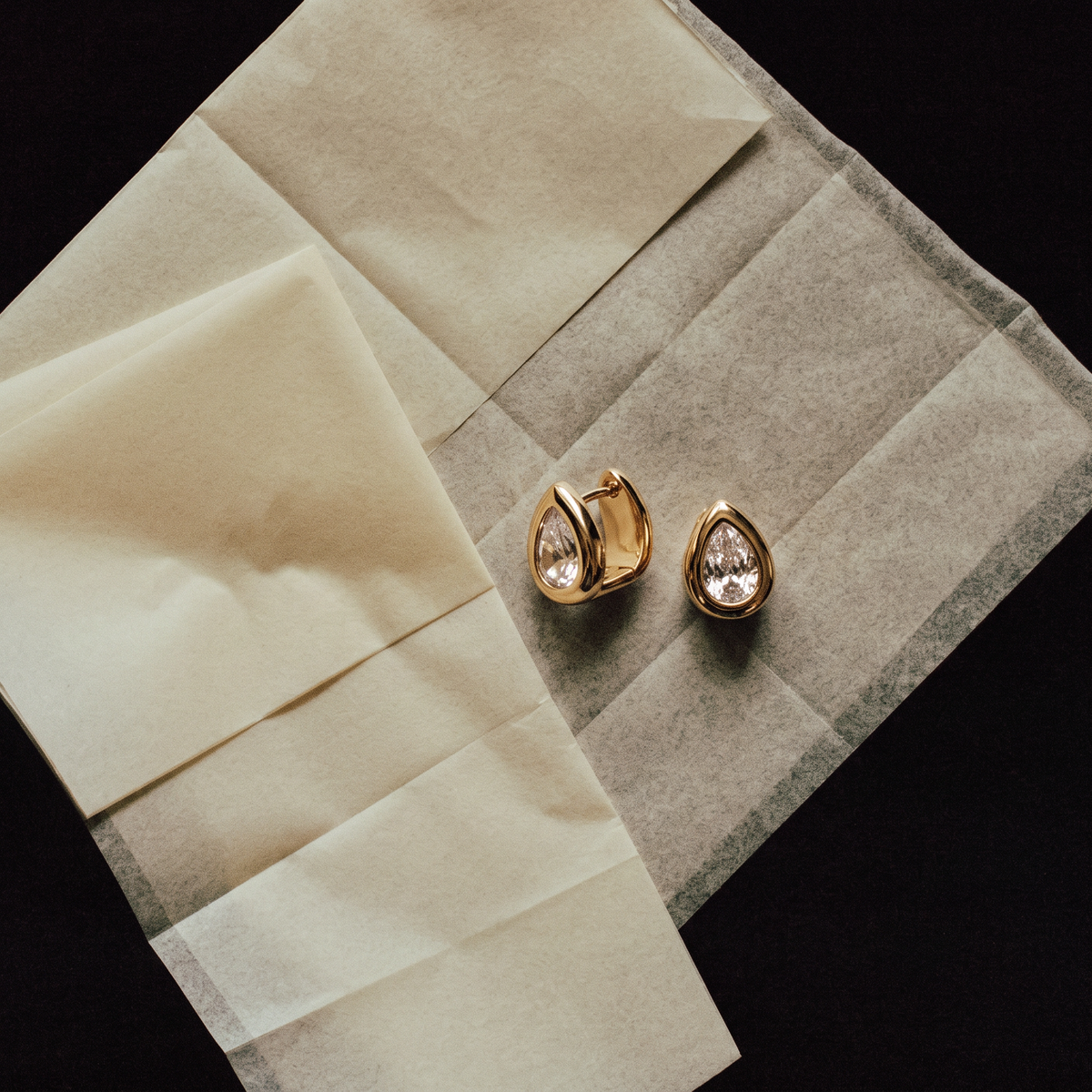
Our collection includes 18K gold-plated and 18K white-gold-plated finishes over brass, with cubic zirconia in stone-set designs. A protective anti-tarnish coating helps preserve the finish, but does not make plating permanent. Individual product pages identify the material and finish of the piece you choose.
The necklace is an example of the stated materials, not a wear-test result or a promise of a particular lifespan. For other shapes, explore DEBACQ necklaces or gold-plated earrings and choose the piece that fits the way you like to get dressed.
Does the warranty cover plating wear?
DEBACQ's published warranty information provides two years of cover against manufacturing defects. It excludes normal wear, accidental damage, improper care and gradual changes to plating. The warranty period is not a promise that the finish will remain unchanged for two years.
If something about your piece concerns you, contact DEBACQ with the order details, product name and a clear photograph before attempting a repair. A particular concern should be assessed rather than dismissed or diagnosed from a general article.
Gold-plated jewelry questions
Is anti-tarnish the same as tarnish-proof?
No. For DEBACQ, the term describes a protective coating, not a permanent-finish guarantee. Follow the care instructions for the piece rather than treating the coating as permission for continuous wear.
Can gold-plated jewelry tarnish without being worn?
Discoloration can develop from reactions with the surrounding environment, not only from wearing the piece. Storage conditions therefore matter too. Follow the maker's storage instructions instead of assuming an unworn item cannot change.
Does a higher karat number mean thicker plating?
No. Karat describes the proportion of gold in the alloy. Coating thickness is a separate specification. An 18K label alone does not establish that a gold layer is thicker or will last longer than another piece's coating.
Choose for the design. Care for the finish.
Understanding plating should make a purchase clearer, not make jewelry harder to enjoy. Find a shape you want to wear, read the materials and make gentle care part of putting it on and taking it off. A considered choice begins with knowing what you are buying.
Explore DEBACQ jewelry
Written by Ben Levante