

How to Wear Multiple Rings: 5 Simple Styling Ideas
To wear multiple rings, begin with two pieces you already like: one focal ring and a simpler companion. Wear them on separate fingers or opposite hands, then try a same-finger stack only when the shapes fit comfortably together. You can mix metal tones, vary the widths and leave fingers bare. There is no need to fill both hands.
Wearing multiple rings does not have to mean stacking them
You can build a ring combination in two different ways. Decide which appeals to you before choosing another piece: a series of details across the hands, or a small group on one finger.
1. One statement ring on one hand, a band on the other
This is the simplest place to begin when you are used to wearing one ring. Put on your favorite statement piece, then try a smaller band on the opposite hand. A rounded ring with visible polished metal and a textured band can share a finish without looking like a matching set.
Try the combination with a white shirt and jeans. The pieces remain easy to see without adding several layers of jewelry. You do not need the same number of rings on each hand, or the same finger placement on both sides.
For a more restrained result, keep the finish similar and vary the surface. For more contrast, try different metal tones while keeping the shapes relatively simple.
2. Two rings on one hand, with a finger between them
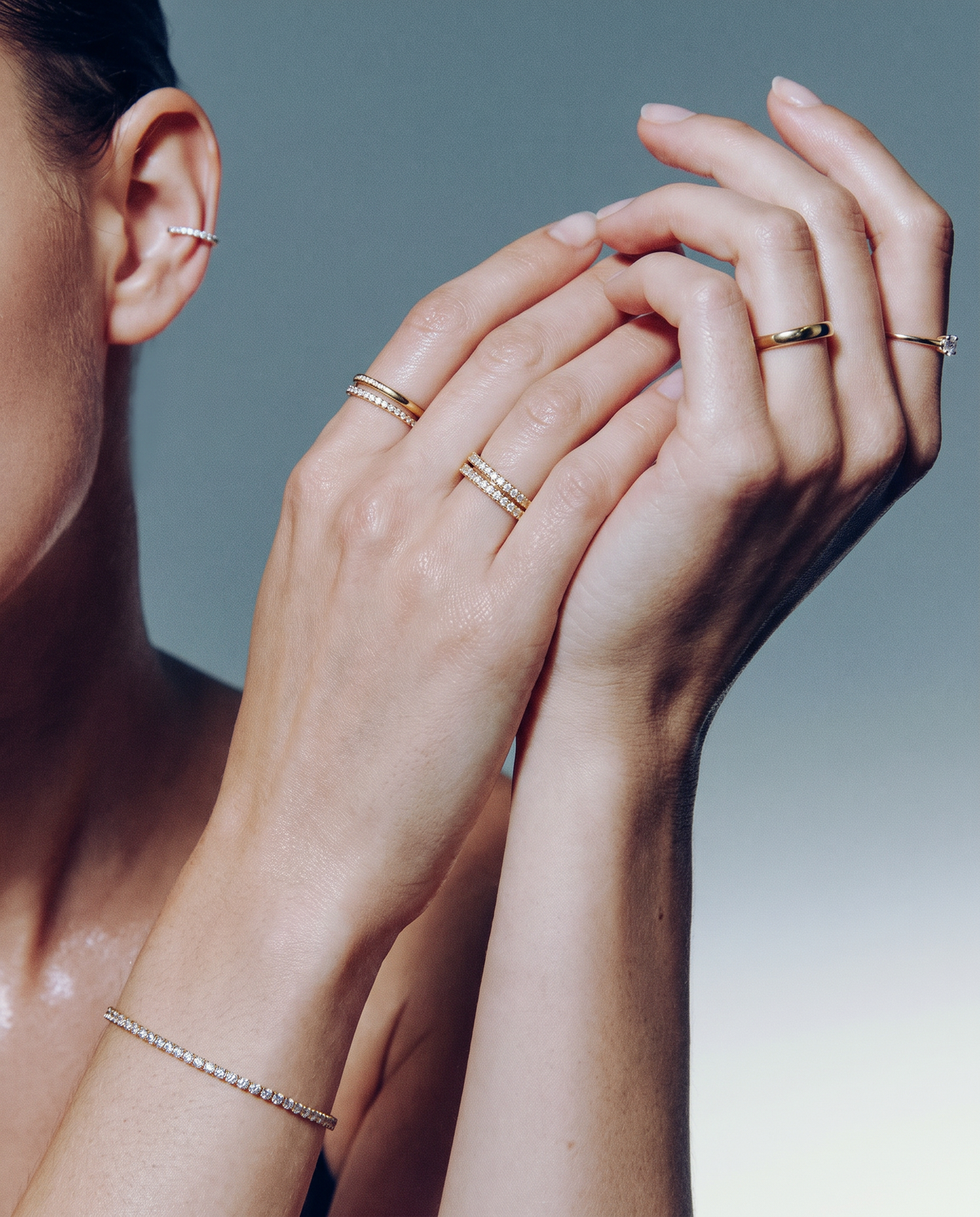
Try a ring on your index finger and another on your ring finger, provided each is sized for that position. Leaving the middle finger bare gives the designs room and makes the arrangement feel different from a continuous row of rings.
Use the bigger outline as your starting point. A dome ring can sit beside a smaller detail farther along the hand, while an open-wrap design can be the focal piece without adding a second ring on that same finger. Move the rings only to fingers where they fit comfortably.
Check with your hand relaxed, not only with your fingers spread for a photograph. If the settings touch or crowd one another, change the placement or divide the rings between your hands.
3. Two slimmer bands on the same finger
For a small ring stack, begin with two slimmer bands you already own. A smooth band and a textured band give you contrast without needing a tall center stone. Try the pair before deciding whether another ring would add anything.
Look at the rings from the side as well as from above. They should sit without one edge lifting the other or a setting pressing into its neighbor. A small gap can be preferable to forcing two shapes flush together. Leave wide domes and projecting wrap designs out of this first experiment.
Bend your finger, hold your phone and make a relaxed fist. If the combined width feels restrictive, wear the rings separately. The aim is a combination you can enjoy wearing, not the largest stack that will fit below the knuckle.
4. Gold and silver-toned rings with a shared detail
You can wear gold and silver-toned rings together. Start with one in each tone, then connect them through something else: rounded shapes, a polished surface or small white stones. Wearing them on different hands makes the contrast easy to try without also having to find shapes that stack.
For example, keep a familiar silver-toned ring and add a gold-plated band with a repeating pattern. You do not need to replace jewelry you already love to make a new finish work. There is no required gold-to-silver ratio; compare the look with your outfit rather than counting pieces.
Here, gold and silver-toned describe the colors. Check each product's material separately: a white-gold-plated finish is not the same material as sterling silver.
5. A sentimental ring with a new piece on the opposite hand
When a wedding band, engagement ring or inherited piece is part of your everyday jewelry, leave it where you prefer wearing it. Build around it with a ring on the other hand instead of feeling that every new design must sit next to it.
A geometric ring can contrast with an older, more detailed design. A polished curve can sit comfortably within an otherwise stone-set look. Choose one detail to repeat when you want a connection, but do not let an existing metal tone rule out every other option.
For rings you intend to wear in direct contact with a treasured setting, ask a jeweler to check the fit and clearance. An attractive pairing in a photograph does not establish that the settings can be worn safely against one another.
Check the fit before building your ring combination
-
Measure the intended finger
Use a ring that fits that exact finger as a reference, or have it measured. Do not assume the same size will work on your index finger, ring finger and opposite hand. Our ring size guide explains how to compare inside diameter and finger measurements.
-
Consider the total width
A broad band can feel closer-fitting than a narrow one. When stacking, judge the combination on your finger rather than assuming that individually comfortable rings will feel the same together. Do not automatically order every ring a size larger; check the intended combination first.
-
Try ordinary hand movements
Type, pick up a bag and bend your fingers. Notice spinning, pressure and contact between settings. Move or remove a ring when it interferes with those movements instead of wearing an uncomfortable arrangement for its appearance.
Let the rest of your jewelry follow
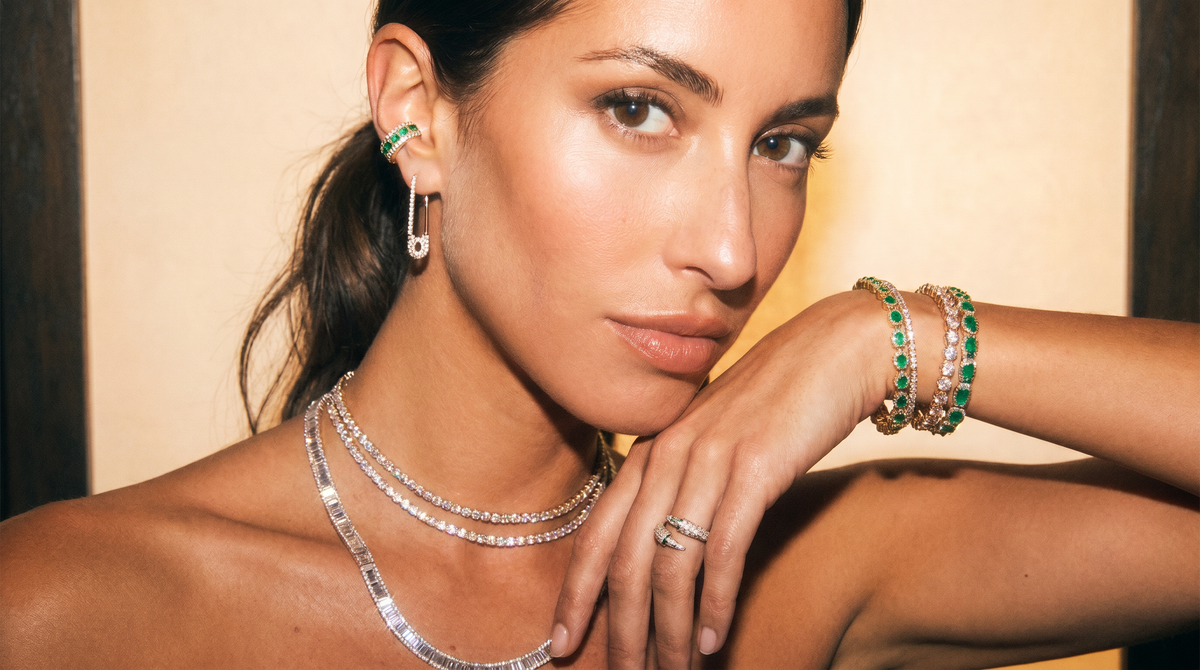
With several rings, try the outfit with simple earrings before adding a bracelet or necklace. For evening, a stone-set ring and earrings can be enough; for daytime, a textured band can add interest to a shirt and a familiar watch. These are starting points, not a limit on how much jewelry you can wear.
For combinations beyond the hands, explore our guide to layering rings, necklaces and bracelets.
Questions about wearing multiple rings
How many rings should you wear on one hand?
There is no fixed styling limit. Start with two and look at the space their shapes occupy. Two wide rings can have more presence than several fine bands. Add another only when you prefer the result and can still move your hand comfortably.
Do rings on both hands need to match?
No. They can share a shape, finish or stone color without belonging to a set. A larger ring on one hand and a quieter band on the other is one way to connect different designs. The placement does not need to be symmetrical.
Can one ring give the appearance of a stack?
Yes. A multi-band design creates several visible lines in a single piece. The Open Pear-Cut Wrap Ring has a three-band open silhouette and one pear-cut white cubic zirconia. It is an alternative to wearing separate rings together, not three individual rings. Check the product's fit information before choosing.
Build around the ring you reach for first
A polished dome, a band with texture or a sculptural wrap. Choose one shape you love, then find the space for a second. A considered combination can be as simple as two rings.
Explore the ring collection
Written by Ben Levante